

Every year, as the monsoon blankets India from July through October, a silent threat multiplies in the stagnant puddles collecting in your flower pots, old tyres, and uncovered water tanks. Dengue fever — transmitted by the Aedes aegypti mosquito — has emerged as one of India's most urgent public health challenges, with the National Centre for Vector Borne Diseases Control (NCVBDC) recording approximately 23,952 cases and 31 deaths in the first half of 2026 alone. Maharashtra, including the Virar–Vasai belt, consistently reports elevated case counts during the post-monsoon surge between August and October.
What makes dengue uniquely dangerous is not just the disease itself, but the widespread misinformation surrounding it. Families obsess over daily platelet counts, spend thousands on unproven "platelet-boosting" supplements, and ignore the actual clinical warning signs — severe abdominal pain, persistent vomiting, and mucosal bleeding — that distinguish a routine viral fever from life-threatening dengue hemorrhagic fever (DHF) or dengue shock syndrome (DSS). Understanding what to watch for, what to do at home, and when to rush to the hospital can genuinely save lives.
This comprehensive guide — reviewed by the Department of General Medicine at Sanjivani Hospital, Virar — covers everything you need to know: from the biology of the dengue virus and its 4 serotypes, to the 9 warning signs that demand emergency care, home care protocols using Indian dietary staples, the truth about platelet counts, diagnostic tests, hospital treatment options, and a practical prevention checklist for your home and community.
What Is Dengue Fever? Understanding the Virus
Dengue fever is an acute viral infection caused by the dengue virus (DENV), which belongs to the Flaviviridae family — the same family as Zika and Japanese Encephalitis viruses. It is transmitted exclusively through the bite of infected female Aedes aegypti and, less commonly, Aedes albopictus mosquitoes. Unlike the Anopheles mosquito (which transmits malaria and bites at night), the Aedes mosquito is a daytime biter, most active during early morning (6–9 AM) and late afternoon (4–6 PM). This is why sleeping under a mosquito net alone is not sufficient protection against dengue.
There are 4 distinct serotypes of the dengue virus — DENV-1, DENV-2, DENV-3, and DENV-4. Infection with one serotype provides lifelong immunity to that specific serotype, but only temporary cross-immunity (about 2–3 months) to the other three. This means a person can get dengue up to 4 times in their lifetime. Critically, a second infection with a different serotype carries a significantly higher risk of developing severe dengue (DHF/DSS) due to a phenomenon called antibody-dependent enhancement (ADE), where pre-existing antibodies from the first infection paradoxically help the new virus replicate more efficiently.
Important: Dengue is NOT transmitted from person to person through direct contact, coughing, sneezing, or sharing food. The only way to contract dengue is through the bite of an infected Aedes mosquito. The mosquito acquires the virus by biting an already-infected person and then passes it on when it bites another person.
Types & Classification of Dengue
The WHO 2009 classification (currently used in Indian clinical guidelines) categorises dengue into three severity levels. Understanding this classification helps you gauge where your symptoms fall and when to escalate to hospital care.
WHO Classification of Dengue Fever Severity
| Classification | Key Features | Management Level |
|---|---|---|
| Dengue Without Warning Signs | High fever (2–7 days), headache, body aches, rash, nausea, leukopenia (low WBC count) | Home care with daily monitoring; outpatient follow-up |
| Dengue With Warning Signs | Abdominal pain, persistent vomiting, fluid accumulation (ascites/pleural effusion), mucosal bleeding, lethargy, liver enlargement, rising hematocrit with falling platelets | Hospitalisation required — IV fluid management |
| Severe Dengue (DHF/DSS) | Severe plasma leakage leading to shock, severe bleeding (vomiting blood, melena), organ impairment (liver AST/ALT > 1000, encephalopathy, myocarditis) | ICU care — may need blood/platelet transfusion, vasopressors |
Causes & Risk Factors: Who Gets Dengue?
The following factors increase your risk of contracting dengue or developing severe disease:
- Aedes mosquito exposure — Living in or travelling to areas with high Aedes mosquito populations, particularly urban and semi-urban areas in tropical India, is the primary risk factor. The Virar–Vasai region, with its mix of construction sites, open drains, and water storage practices, creates ideal breeding conditions.
- Monsoon and post-monsoon season — Peak transmission occurs from July through November when rainfall creates stagnant water breeding sites. In Maharashtra, September–October is the highest-risk window.
- Stagnant water around homes — Uncovered water tanks, coolers, flower pot saucers, discarded tyres, coconut shells, construction trenches, and even bottle caps collecting rainwater provide breeding sites for Aedes mosquitoes, which need only a tablespoon of standing water to lay 100–200 eggs.
- Previous dengue infection (secondary infection) — Having had dengue once with one serotype dramatically increases the risk of severe dengue if infected by a different serotype. Antibody-dependent enhancement (ADE) can cause the virus to replicate more aggressively.
- Children and young adults — While dengue affects all age groups, children aged 5–15 years are disproportionately affected in endemic areas. Severe dengue is more common in children than adults in many outbreaks.
- Pregnancy — Pregnant women with dengue face additional risks including preterm delivery, low birth weight, and vertical transmission to the newborn. Dengue during the third trimester requires careful obstetric monitoring.
- Chronic conditions (diabetes, hypertension, asthma) — Patients with pre-existing conditions like diabetes, heart disease, or chronic lung disease are at higher risk of complications and prolonged recovery from dengue.
- Overcrowded and poorly ventilated living spaces — Dense urban housing without mosquito screens, common in many parts of Mumbai Metropolitan Region (MMR) including Virar, increases exposure to daytime-biting Aedes mosquitoes.
- Lack of personal protection — Not using mosquito repellents, wearing short-sleeved clothing during peak mosquito hours, and absence of window/door screens significantly increase bite risk.
- Blood group O — Some studies suggest that individuals with blood group O may be more attractive to Aedes mosquitoes, though this link requires further research.
9 Warning Signs of Dengue: Symptoms You Must Not Ignore
Dengue symptoms typically appear 4–10 days after the infective mosquito bite (this is the incubation period) and progress through three clinical phases: the febrile phase (days 1–3), the critical phase (days 4–6), and the recovery phase (days 7–10). The critical phase is the most dangerous — it's when platelets drop, plasma leaks from blood vessels, and severe dengue complications can develop.
Watch for these 9 key symptoms and warning signs:
- Sudden high-grade fever (39–40°C / 102–104°F) — Dengue fever typically begins abruptly with a high fever that can spike to 104°F. Unlike a gradual-onset viral fever, dengue fever is sudden and often accompanied by chills. The fever usually lasts 2–7 days and may follow a characteristic 'saddleback' pattern — dropping briefly then rising again.
- Severe headache and retro-orbital pain (pain behind the eyes) — An intense, throbbing headache concentrated in the forehead area, often worsened by eye movement, is a hallmark of dengue. This 'pain behind the eyes' distinguishes dengue from regular viral fevers and is caused by inflammation of the muscles around the eye socket.
- Intense muscle and joint pain ('break-bone fever') — Dengue is historically called 'break-bone fever' because the myalgia (muscle pain) and arthralgia (joint pain) can be so severe that patients feel as though their bones are breaking. The pain typically affects the lower back, arms, and legs.
- Skin rash (maculopapular) — A fine, flat red rash often appears 3–5 days after fever onset, spreading from the torso to the face and limbs. In some patients, a second rash appears during recovery with a characteristic 'islands of white in a sea of red' pattern (white patches surrounded by redness).
- Nausea, vomiting, and loss of appetite — Persistent nausea and vomiting (3 or more episodes in 24 hours) are warning signs of progressing disease. Loss of appetite is nearly universal and can contribute to dehydration if fluid intake is not actively maintained.
- Bleeding signs (petechiae, gum bleeding, nose bleeds) — Small red/purple spots under the skin (petechiae), bleeding gums when brushing teeth, blood in urine or stool, and nosebleeds indicate that platelets are dropping and capillary fragility is increasing. A positive 'tourniquet test' (petechiae appearing after blood pressure cuff inflation) is a clinical indicator.
- Severe abdominal pain or tenderness — Sharp, persistent pain in the abdomen — especially in the upper right quadrant (liver area) — is one of the most important red flags for severe dengue. It often indicates liver enlargement, fluid accumulation (ascites), or impending plasma leakage.
- Persistent vomiting with inability to keep fluids down — If the patient cannot retain oral fluids for more than 6–8 hours, intravenous hydration becomes essential. Dehydration from vomiting combined with plasma leakage can rapidly lead to dengue shock syndrome.
- Signs of shock: cold/clammy skin, weak rapid pulse, drowsiness — The most dangerous sign. If a dengue patient develops cold extremities, a rapid thready pulse, narrowing pulse pressure (difference between systolic and diastolic blood pressure < 20 mmHg), confusion, or extreme drowsiness, this signals dengue shock syndrome (DSS) — a medical emergency requiring immediate ICU care.
🚨 EMERGENCY — Rush to Hospital Immediately If You Notice: Severe abdominal pain that won't subside | Persistent vomiting (≥3 times in 24 hours) | Bleeding from gums, nose, or in vomit/stool | Cold, clammy skin with rapid weak pulse | Extreme drowsiness, confusion, or restlessness | Difficulty breathing | No urine output for 6+ hours. These are signs of severe dengue — delay can be fatal. Sanjivani Hospital's 24/7 Emergency Department is equipped to manage severe dengue with IV fluid protocols, platelet monitoring, and ICU backup.
Understanding Dengue Phases: The Critical Day-by-Day Timeline
Day-by-day progression of dengue fever phases
| Phase | Days | What Happens | What to Monitor |
|---|---|---|---|
| Febrile Phase | Day 1–3 | High fever (up to 104°F), headache, body pain, nausea, facial flushing, skin rash may appear | Temperature, fluid intake, urine output, watch for warning signs |
| Critical Phase | Day 4–6 | Fever may drop (do NOT assume recovery), platelet count falls, plasma leakage begins, risk of hemorrhage and shock is highest | Platelet count, hematocrit (PCV), blood pressure, abdominal pain, bleeding signs — THIS is when hospitalisation may be needed |
| Recovery Phase | Day 7–10 | Appetite returns, rash may reappear (recovery rash), platelet count rises, fluid is reabsorbed from tissues | Watch for fluid overload (puffy face, breathing difficulty), itching rash is normal and a good sign |
Critical Insight: The most dangerous period in dengue is NOT when the fever is highest — it's when the fever DROPS (around day 4–6). Many families make the mistake of relaxing vigilance when the temperature normalises, but this is exactly when plasma leakage, haemorrhage, and shock are most likely. Continue monitoring closely for 48 hours after fever subsides.
Home Care & Supportive Treatment for Dengue
There is no specific antiviral drug for dengue — treatment is entirely supportive. For the majority of patients (those with dengue without warning signs), proper home care is effective and sufficient. The goal is to maintain hydration, control fever safely, provide nutritional support, and monitor for warning signs that would trigger hospitalisation.

1. Hydration — The Most Critical Factor
Oral hydration is the single most important intervention in dengue management. Dengue causes plasma leakage from blood vessels, and without adequate fluid replacement, patients can develop hypovolemic shock. Aim for at least 2.5–3 litres of fluids per day for adults. Preferred fluids include: ORS (Oral Rehydration Solution) — the gold standard; coconut water (nariyal paani) — naturally rich in electrolytes and potassium; fresh lime water with salt and sugar (nimbu paani); rice kanji/congee (rice water); clear vegetable soups (dal ka paani, tomato soup); and buttermilk (chaas). Avoid caffeinated beverages, alcohol, and very cold drinks.
2. Fever Management — Only Paracetamol
Use paracetamol (acetaminophen) for fever and body pain — 500–650 mg every 4–6 hours for adults (maximum 4 grams/day). For children, use weight-based dosing as prescribed by your paediatrician. STRICTLY AVOID: Aspirin (Disprin), Ibuprofen (Brufen), Diclofenac (Voveran), Nimesulide (Nimulid), and all NSAIDs — these drugs inhibit platelet function and increase bleeding risk, which can be fatal in dengue. Also avoid unnecessary antibiotics — dengue is a viral infection, and antibiotics do nothing against viruses.
⚠️ Medication Warning: NEVER take Aspirin, Ibuprofen, Diclofenac, or any NSAID painkiller during dengue fever. These drugs interfere with platelet function and can cause life-threatening bleeding. Only Paracetamol (Crocin/Dolo/Calpol) is safe. If unsure, consult your doctor before taking any medicine.
3. Rest and Activity Restriction
Complete bed rest is essential during the febrile phase. Avoid strenuous physical activity, exercise, and even routine household work for at least 7–10 days from symptom onset. Physical exertion can worsen myalgia, increase heart rate, and place additional stress on a body already fighting viral replication. Most patients feel extreme fatigue — this is normal and may persist for 2–4 weeks after recovery (post-dengue fatigue syndrome).
4. Sponging for High Fever
If fever exceeds 103°F despite paracetamol, use tepid water sponging (lukewarm water, NOT cold water or ice) on the forehead, armpits, and groin. This helps bring body temperature down gradually. Never use ice baths or alcohol rubs — these can cause shivering, which paradoxically raises core body temperature.
5. Monitoring at Home — What to Track Daily
Daily home monitoring checklist for dengue patients
| Parameter | How to Monitor | When to Worry |
|---|---|---|
| Temperature | Digital thermometer every 4–6 hours | Fever > 104°F that doesn't respond to paracetamol, OR sudden drop in fever (day 4–6) with worsening symptoms |
| Fluid intake | Measure in glasses/litres per day | Less than 1.5 litres/day, inability to keep fluids down, dry lips/tongue, dark-coloured urine |
| Urine output | Observe frequency and colour | No urination for 6+ hours, very dark or concentrated urine |
| Bleeding | Check gums, skin (petechiae), nose, stool, urine | Any new bleeding — gums, nose, blood in vomit or stool, heavy menstrual bleeding |
| Abdominal pain | Ask patient to rate pain 1–10 | Persistent or worsening pain, especially upper right quadrant (liver area) |
| Mental state | Observe alertness, mood, responsiveness | Excessive drowsiness, confusion, irritability, restlessness |
| Platelet count | Blood test (CBC) — daily or alternate day as advised | Rapid decline trend (even if absolute number is above 50,000), or count below 50,000 |
When to See a Doctor — Don't Delay
Visit Sanjivani Hospital's Emergency Department or your nearest hospital immediately if the patient shows ANY of the following:
- Fever lasting more than 5 days without improvement despite paracetamol and hydration
- Persistent vomiting — 3 or more episodes in 24 hours, especially if unable to keep oral fluids down
- Severe abdominal pain — particularly in the upper right abdomen (liver area)
- Any bleeding — from gums, nose, in vomit (coffee-ground appearance), in stool (black/tarry), blood in urine, or unusually heavy menstrual flow
- Skin changes — cold, clammy, or mottled skin; pale or bluish discolouration of lips and fingertips
- Rapid weak pulse or dizziness on standing — signs of dropping blood pressure and impending shock
- Platelet count dropping rapidly even if still above 50,000 — the rate of decline matters more than the absolute number
- Extreme fatigue, drowsiness, confusion, or restlessness — altered mental status can indicate brain inflammation or severe shock
- Difficulty breathing — may indicate pleural effusion (fluid around the lungs) from plasma leakage
- No urine output for 6 or more hours — indicates dehydration or kidney compromise
Diagnostic Tests: How Dengue Is Confirmed
Diagnosing dengue accurately is crucial because its early symptoms overlap with malaria, typhoid, chikungunya, and viral fevers. Your doctor will order specific blood tests depending on when in the illness you present.
Dengue diagnostic tests and their timing
| Test | What It Detects | Best Timing | Accuracy | Cost Range (India) |
|---|---|---|---|---|
| NS1 Antigen Test | Dengue virus protein (active infection marker) | Day 1–5 of fever | High sensitivity in first 3 days (>90%); drops after day 5 | ₹500–₹900 |
| Dengue IgM Antibody | Recent/current infection antibody | Day 5 onwards (after day 4–5 of fever) | Good — confirms recent dengue but may cross-react with Zika | ₹400–₹800 |
| Dengue IgG Antibody | Past infection or secondary infection marker | Day 7 onwards (or earlier in secondary infections) | Helps distinguish primary vs secondary infection; rising titre is significant | ₹400–₹800 |
| NS1 + IgM/IgG Combo (Dengue Duo) | All three markers in one test | Any time during illness | Best comprehensive option — covers all phases of infection | ₹800–₹1,500 |
| CBC (Complete Blood Count) | Platelet count, WBC count, hematocrit (PCV) | Daily or alternate days during illness | Essential for monitoring — not for diagnosis. Low WBC + low platelets + rising PCV = dengue pattern | ₹200–₹400 |
Pro Tip: If you get tested on day 1–2 of fever, ask for the NS1 antigen test (most accurate early). If you're tested after day 5, the IgM antibody test is more reliable. The best approach? Get the NS1 + IgM/IgG Combo test which covers all phases. Sanjivani Hospital's in-house lab offers all dengue tests with same-day results.
Medical & Hospital Treatment for Dengue
Most dengue patients (~80%) recover with home care alone and never need hospitalisation. However, when warning signs appear, timely hospital treatment is lifesaving. Here's what happens when you're admitted for dengue:
Hospital treatment protocols for dengue by severity
| Treatment | When It's Used | How It Works | Duration |
|---|---|---|---|
| IV Fluid Therapy (Normal Saline / Ringer's Lactate) | Dengue with warning signs — the mainstay of hospital management | Replaces plasma loss from capillary leakage, maintains blood pressure and organ perfusion. Rate is carefully adjusted based on hematocrit (PCV) levels | 24–72 hours during critical phase; tapered as patient improves |
| Serial Blood Monitoring (CBC, PCV, LFT) | All hospitalised dengue patients | Tracks platelet trend, hematocrit changes (rising PCV = plasma leakage), and liver function. Done every 6–12 hours during critical phase | Throughout hospitalisation |
| Platelet Transfusion | ONLY when platelets < 10,000–20,000 WITH active significant bleeding | Provides donor platelets to temporarily support clotting. NOT routinely given for low counts without bleeding | Single or multiple units as clinically indicated |
| Packed Red Blood Cell (PRBC) Transfusion | Significant hemorrhage with dropping hemoglobin | Replaces lost red blood cells to maintain oxygen-carrying capacity | As needed based on hemoglobin levels |
| ICU Care with Vasopressors | Dengue Shock Syndrome (DSS) — blood pressure not responding to IV fluids | Vasopressor drugs (noradrenaline/dopamine) maintain blood pressure when fluids alone are insufficient. Requires central line and arterial monitoring | Until hemodynamic stability is achieved (usually 24–48 hours) |
| Oxygen/Ventilatory Support | Respiratory distress from pleural effusion or pulmonary edema | Non-invasive ventilation (BiPAP) or mechanical ventilation if needed. Pleural effusion usually resolves on its own and rarely needs drainage | Until respiratory stability; effusion reabsorbs during recovery phase |
The Truth About Platelet Counts — 7 Myths Busted
No aspect of dengue generates more panic, misinformation, and unnecessary spending than platelet counts. Let's separate medical fact from WhatsApp fiction.
Common dengue platelet myths vs medical facts
| Myth | Fact |
|---|---|
| "Platelets below 1 lakh means dengue is dangerous" | Normal platelet count is 1.5–4 lakh/µL. A count of 80,000–100,000 is common in dengue and usually clinically insignificant if there is no bleeding. Even counts of 20,000–50,000 may not require any intervention if the patient is clinically stable. |
| "Low platelets always need a transfusion" | Platelet transfusions are rarely needed. Indian NCVBDC guidelines recommend transfusion ONLY when platelets fall below 10,000–20,000 AND there is significant active bleeding. Prophylactic transfusions (just because the number is low) are NOT recommended. |
| "Papaya leaf juice dramatically increases platelets" | Limited and inconclusive evidence. While some small studies (notably from Malaysia and Sri Lanka) suggested a modest benefit, the results have NOT been replicated in large clinical trials. Papaya leaf juice is not harmful, but it should NEVER replace proper medical monitoring and treatment. |
| "Goat milk (bakri ka doodh) cures dengue" | No scientific evidence whatsoever. Goat milk has no antiviral or platelet-boosting properties. This is a purely anecdotal folk remedy with zero clinical basis. It won't harm you, but it won't treat dengue either. |
| "You must check platelet count every few hours" | Once daily or alternate-day CBC is usually sufficient during uncomplicated dengue. More frequent monitoring (every 6–12 hours) is only needed for hospitalised patients in the critical phase. Obsessive testing adds cost without clinical benefit. |
| "Rising platelets mean you're cured" | Platelets naturally recover during the recovery phase (day 7–10). However, the recovery phase carries its own risk — reabsorption of leaked plasma can cause fluid overload, pulmonary edema, or brain swelling if IV fluids are not tapered appropriately. |
| "Kiwi fruit and pomegranate can replace medical treatment" | Nutritional support is helpful but not curative. Kiwi, pomegranate, and vitamin C-rich fruits support immune function and provide needed nutrients. But they do not replace medical care. If you have warning signs, no amount of fruit can substitute for IV fluid therapy and clinical monitoring. |
Prevention: 10 Practical Steps to Protect Your Family
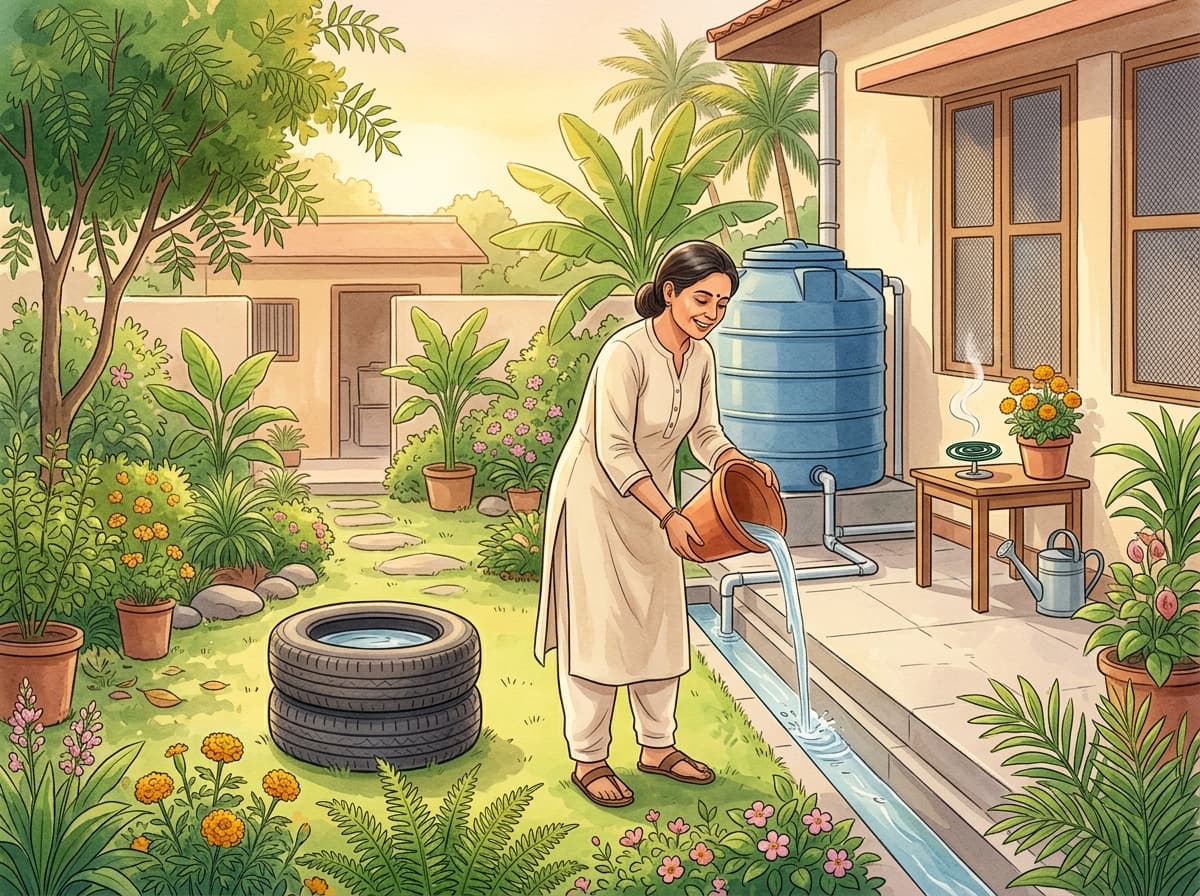
Follow these evidence-based prevention measures to reduce dengue risk for your household:
- Eliminate stagnant water weekly — Empty, scrub, and dry all water-collecting containers every week: flower pot saucers, cooler trays, old tyres, coconut shells, plastic covers, bird baths, and construction debris. Remember, Aedes mosquitoes need only a tablespoon of standing water to breed.
- Cover water storage tanks and containers — Use tight-fitting lids on all overhead and ground-level water tanks, drums, and matkas. If lids aren't available, use fine mosquito mesh secured with elastic bands.
- Install mosquito mesh on windows and doors — Fine wire or nylon mesh on all windows and ventilation openings prevents mosquitoes from entering the home. This is especially important because Aedes mosquitoes are indoor-resting and breed near human habitation.
- Use mosquito repellents during daytime — Apply DEET-based (20–30%) or picaridin-based repellent on exposed skin during early morning and late afternoon hours. Reapply every 4–6 hours. For children, use age-appropriate formulations. Brands available in India: Odomos, Goodknight Fabric Roll-On.
- Wear protective clothing — Full-sleeved shirts, long trousers, and socks — especially during peak mosquito hours (6–9 AM and 4–6 PM). Light-coloured clothing is preferable as dark colours attract mosquitoes.
- Use mosquito coils, liquid vaporisers, or electric bats — Indoor mosquito control with All Out, Good Knight, or Mortein liquid vaporisers is effective. Mosquito rackets (electric bats) are chemical-free alternatives for killing visible mosquitoes.
- Maintain clean drainage around your home — Ensure gutters, drains, and sewage channels near your home are clear and flowing. Report blocked drains to your local municipal corporation (Vasai-Virar Municipal Corporation helpline).
- Use larvicides in water that cannot be drained — For permanent water bodies like ornamental fountains, construction pits, or tanks that cannot be emptied, add temephos granules (abate) or introduce Gambusia (mosquito-eating fish) — available free from many municipal health offices.
- Community action — Dengue is a community disease. Organise weekly neighbourhood clean-up drives during monsoon. One neglected house with breeding sites can put the entire locality at risk.
- Stay updated on vaccination — The QDENGA (TAK-003) dengue vaccine has received regulatory approval in India in 2026. While widespread public rollout is expected in 2027, discuss eligibility with your doctor — especially if you or your family members have had dengue before.
Special Considerations
Dengue in Children
Children aged 5–15 years are the most commonly affected age group in endemic areas. Children with dengue may present differently from adults — they may have fewer classical symptoms but can deteriorate rapidly. Key differences: Children are more prone to high fevers (>104°F), febrile seizures, and dehydration. Severe dengue (DHF/DSS) is more common in children than adults in many outbreaks. Fluid management requires weight-based calculations — never self-administer IV fluids to a child at home. Always consult a paediatrician.
Dengue in Pregnancy
Dengue during pregnancy carries additional risks including preterm labour, low birth weight, and maternal haemorrhage. The physiological changes of pregnancy (increased blood volume, altered immune response) can make it harder to distinguish dengue warning signs from normal pregnancy symptoms. All pregnant women with suspected dengue should be hospitalised for monitoring, regardless of severity. Vertical transmission (mother to baby) is possible, especially if the mother is viraemic around the time of delivery. Sanjivani Hospital's OB-GYN department coordinates closely with the Medicine department for managing dengue in pregnancy.
Dengue in Diabetic Patients
Patients with diabetes mellitus face a dual challenge during dengue. High blood sugar impairs immune function, potentially prolonging the infection. Dengue-related nausea and vomiting disrupt meal timing and oral medications, risking both hypoglycaemia and hyperglycaemia. Some studies suggest that diabetic patients have a higher risk of developing severe dengue. Advice: Monitor blood sugar 4–6 times daily during dengue illness. Switch from long-acting oral medications to short-acting insulin under medical guidance if oral intake is compromised. Stay in close contact with your physician.
Dietary Recommendations During Dengue Recovery
Indian diet recommendations during dengue recovery
| ✅ Foods to Eat (Supportive) | ❌ Foods to Avoid |
|---|---|
| Coconut water (nariyal paani) — natural electrolytes, potassium-rich | Oily and fried foods — samosa, pakora, vada, deep-fried snacks (hard to digest, tax the liver) |
| ORS solution — essential for electrolyte replacement | Spicy food — excessive chilli, masala, vinegar-based pickles (can worsen nausea and gastric irritation) |
| Khichdi (dal-rice) — easily digestible, provides protein and carbs | Non-vegetarian food (during acute phase) — heavy meats, fried fish (hard to digest when appetite is poor) |
| Moong dal soup / dal ka paani — light protein source | Caffeinated drinks — tea, coffee, cola (can worsen dehydration) |
| Papaya (ripe fruit) — vitamin C, folate, and enzymes | Alcohol — absolutely contraindicated (liver is already stressed) |
| Pomegranate (anaar) — iron and antioxidants | Cold beverages and ice cream — can aggravate throat irritation and cough |
| Kiwi fruit — high vitamin C and K content | Raw salads during acute phase — risk of bacterial co-infection when immunity is low |
| Boiled vegetables (lauki, tori, pumpkin) — gentle on stomach | Packaged/processed foods — high sodium, preservatives, low nutritional value |
| Curd/yoghurt (dahi) — probiotics for gut health | Citrus juices in excess — can cause acidity on empty stomach |
| Ragi/nachni porridge — calcium, iron, easy to digest | Bitter gourd (karela) juice in excess — despite folk claims, excess can cause nausea |
Recovery Timeline: What to Expect After Dengue
Understanding the recovery journey helps set realistic expectations and prevents premature return to strenuous activities:
- Days 7–10: Acute recovery — Fever resolves, appetite slowly returns, itchy recovery rash may appear (a good sign!). Platelets begin climbing. You'll still feel very weak and tired.
- Week 2: Rebuilding strength — Energy levels improve but fatigue persists. Light activities like short walks are okay. Continue high-protein, nutrient-dense diet. Platelets normalise in most patients.
- Weeks 3–4: Post-dengue fatigue syndrome — Up to 30–50% of dengue patients experience lingering fatigue, joint aches, hair thinning, mood changes, and difficulty concentrating for 2–6 weeks after recovery. This is normal and resolves gradually.
- Week 4–6: Return to normal — Gradually resume work, exercise, and routine activities. Avoid intense physical training for at least 4 weeks. If fatigue persists beyond 6 weeks, consult your doctor for thyroid and nutritional screening.
- Long-term immunity — You now have lifelong immunity to the serotype that infected you. However, you remain susceptible to the other 3 serotypes — and a future secondary infection carries higher risk. Continue dengue prevention measures rigorously.
Sanjivani Hospital — Your Dengue Care Partner in Virar: Our Department of General Medicine offers comprehensive dengue management — from rapid NS1/IgM testing in our in-house lab, to IV fluid therapy suites, daily platelet monitoring, and ICU-level care for severe dengue. We also provide paediatric dengue care and specialised management for dengue in pregnancy. Our 24/7 Emergency Department is equipped to handle dengue emergencies at any hour. Call or visit for a consultation today.
The Bottom Line
Key takeaways from this comprehensive dengue guide:
- Dengue is preventable — eliminating stagnant water around your home is the single most effective measure. One weekly clean-up drive can dramatically reduce mosquito breeding.
- Hydration saves lives — in uncomplicated dengue, drinking enough fluids (ORS, coconut water, soups) is more important than any medicine. There is no antiviral drug for dengue; treatment is supportive.
- Don't panic over platelet counts — the clinical picture (how the patient looks and feels) matters far more than the number. Platelet transfusions are rarely needed and should only be done on a doctor's recommendation.
- Watch for warning signs, not just fever — severe abdominal pain, persistent vomiting, bleeding, cold/clammy skin, and drowsiness are the true red flags. The critical phase (day 4–6) is when most complications occur — stay vigilant even when fever drops.
- Seek timely medical care — early hospitalisation for patients with warning signs reduces dengue mortality to less than 1%. Delay can turn a manageable illness into a life-threatening emergency. When in doubt, visit Sanjivani Hospital's emergency department.