Walk into any gym in Mumbai, Virar, Thane, or any Indian city today, and you will overhear heated debates about creatine — usually from someone who has never actually read a research paper on it. 'Bhai, creatine is basically a steroid.' 'It will destroy your kidneys.' 'You'll go bald.' 'Only bodybuilders need it.' These statements are not just wrong — they are dangerously wrong. They discourage millions of Indians from safely using the single most scientifically validated nutritional supplement in human history.
Here is the clinical reality: creatine monohydrate has been evaluated in over 500 peer-reviewed studies across diverse populations — men, women, the elderly, children with neuromuscular disorders, vegetarians, athletes, and sedentary individuals. International bodies including the International Society of Sports Nutrition (ISSN), the American College of Sports Medicine (ACSM), and the European Food Safety Authority (EFSA) have all affirmed its safety and efficacy when consumed at recommended doses. India's own Food Safety and Standards Authority (FSSAI) classifies creatine as a permissible nutraceutical ingredient.
Yet the myths persist — amplified by social media misinformation, unqualified gym trainers (who account for over 30% of supplement recommendations in Indian gyms according to cross-sectional surveys), and a cultural tendency to view any supplement not found in a grandmother's kitchen with suspicion. This comprehensive guide from Sanjivani Hospital separates every myth from medical fact, explains the biochemistry in plain language, and provides actionable, India-specific guidance.
What Is Creatine? Understanding the Molecule Your Body Already Makes
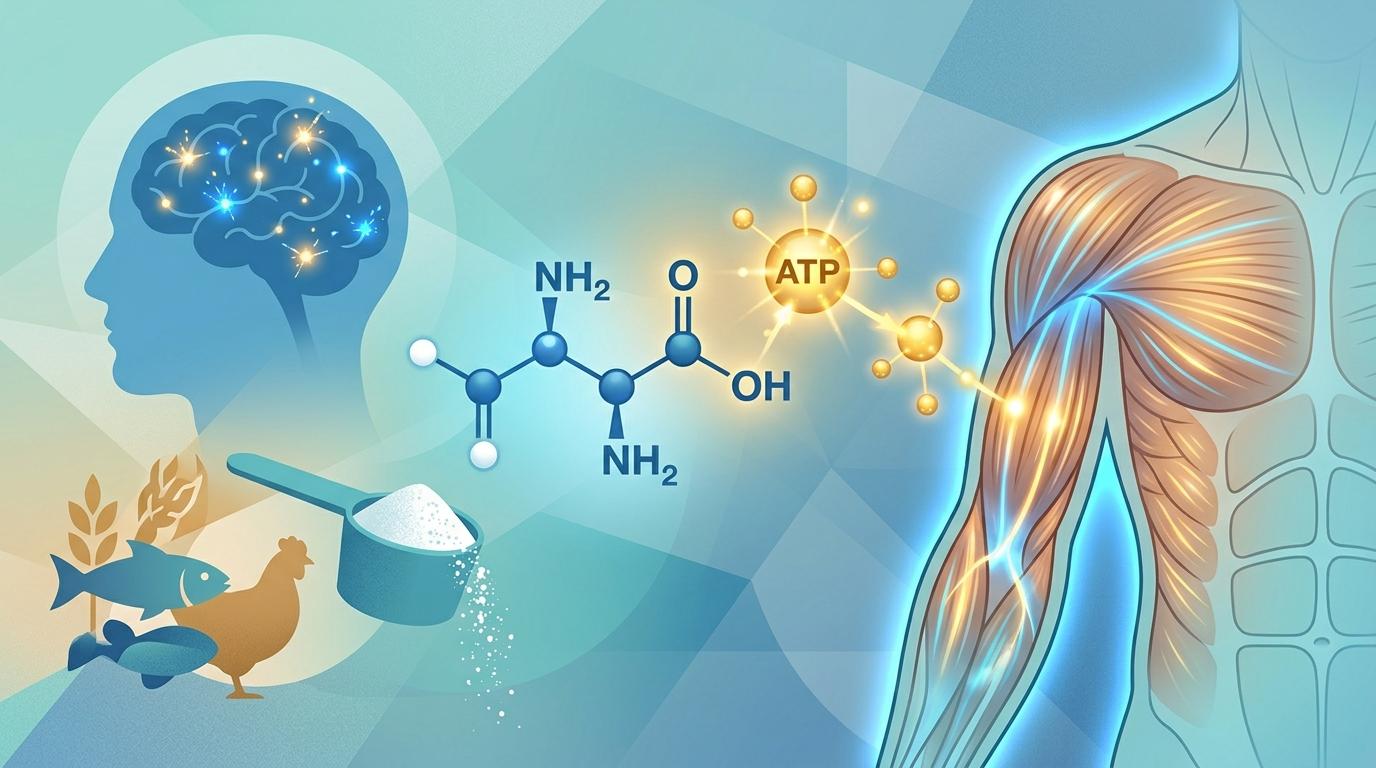
Creatine is a naturally occurring amino acid derivative synthesized inside your own body every single day. Your liver, kidneys, and pancreas produce approximately 1 to 2 grams of creatine daily from three amino acid precursors: arginine, glycine, and methionine. Once synthesized, creatine travels through the bloodstream and is actively transported into tissues with high energy demands — primarily skeletal muscle (which stores ~95% of total body creatine), with the remaining ~5% distributed in the brain, heart, and testes.
Inside muscle cells, creatine binds with a phosphate group to form phosphocreatine (PCr) — your body's emergency energy reserve. When you perform any explosive, high-intensity movement — sprinting, lifting a heavy weight, jumping, or even standing up quickly — your muscles burn Adenosine Triphosphate (ATP), the universal energy currency of every cell. ATP loses a phosphate group and becomes ADP (Adenosine Diphosphate), which cannot fuel muscle contraction. This is where phosphocreatine intervenes: the enzyme creatine kinase rapidly donates PCr's phosphate group back to ADP, regenerating fresh ATP within seconds. Without this system, your muscles would fatigue after just 2–3 seconds of maximum effort.
💡 Key Distinction — Creatine vs. Creatinine: Creatine is a vital energy molecule. Creatinine is a harmless metabolic waste product generated when creatine breaks down naturally. Blood tests measure creatinine levels to estimate kidney function. Creatine supplementation mildly raises creatinine levels (because there's more creatine being metabolized), which can mislead doctors unfamiliar with supplement use into falsely suspecting kidney disease. Always inform your physician if you take creatine before a blood test.
How Does Creatine Work? The ATP–Phosphocreatine Energy System
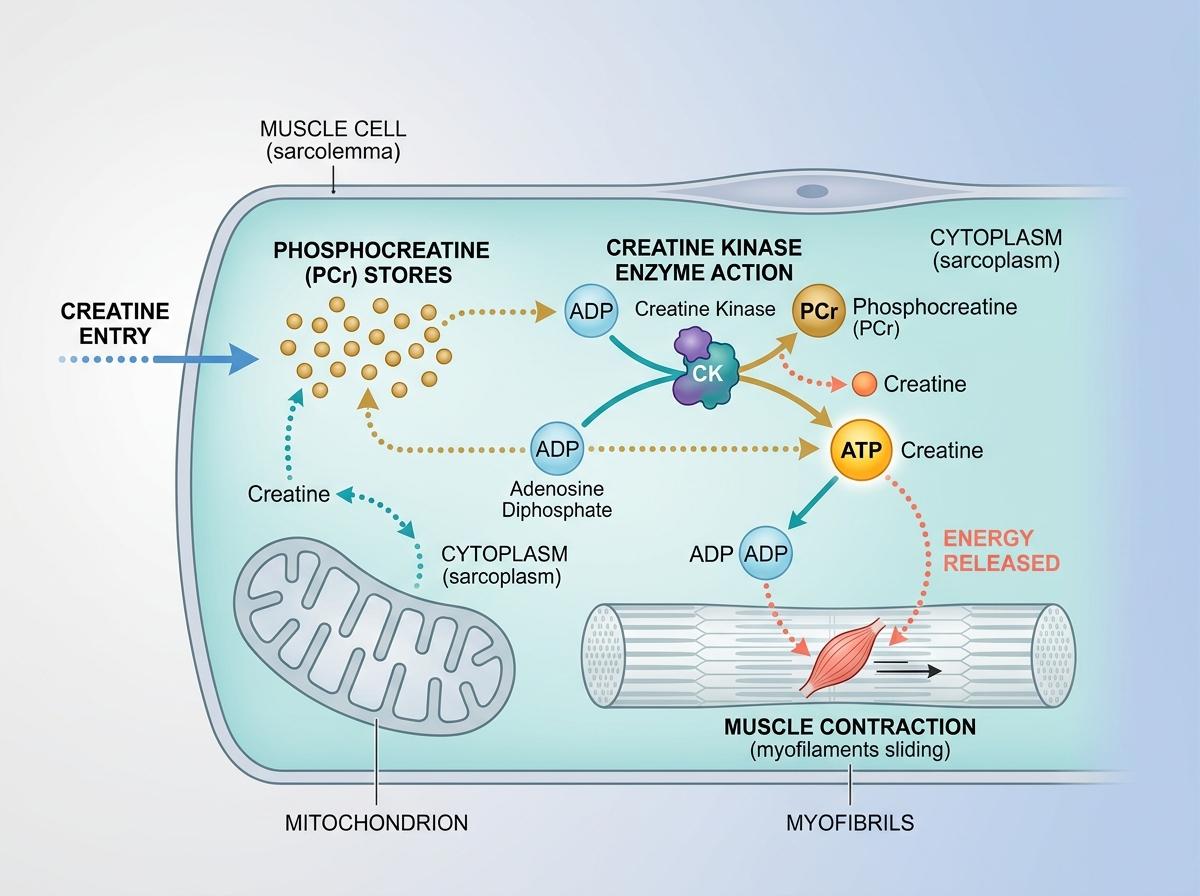
Your body has three distinct energy systems, each serving different exercise durations and intensities. Creatine directly powers the phosphagen system (also called the ATP-PCr system), which fuels explosive efforts lasting 0 to 10 seconds:
Human energy systems and creatine's role
Scroll table →| Energy System | Primary Fuel | Duration | Exercise Examples | Creatine's Role |
|---|---|---|---|---|
| Phosphagen (ATP-PCr) System | Stored ATP + Phosphocreatine | 0–10 seconds | 1-rep max deadlift, 100m sprint, vertical jump, throwing | DIRECT — Creatine supplementation increases PCr stores by 20%–40%, enabling more reps and greater peak power |
| Glycolytic (Anaerobic) System | Muscle glycogen → Lactic acid | 10 seconds – 2 minutes | 400m sprint, high-rep sets, HIIT intervals, wrestling | INDIRECT — Faster ATP regeneration between sets allows greater glycolytic training volume |
| Oxidative (Aerobic) System | Carbohydrates + Fats + Oxygen | 2 minutes – hours | Marathon running, cycling, swimming, brisk walking | MINIMAL — Primarily an anaerobic supplement, though enhanced training capacity may improve aerobic adaptation indirectly |
By supplementing with creatine monohydrate, you increase the total pool of phosphocreatine stored inside your muscle cells by 20% to 40%. This means more ATP is available for each explosive effort, faster recovery between sets, greater total training volume per session, and ultimately — more stimulus for muscle growth and strength adaptation over weeks and months.
The 7 Biggest Creatine Myths — Busted with Clinical Evidence
Let us systematically dismantle the most common myths circulating in Indian gyms, WhatsApp groups, and social media reels — using nothing but published, peer-reviewed clinical evidence:
Myth 1: "Creatine Damages Your Kidneys"
The Verdict: FALSE. This is the most persistent and dangerous myth. It originates from a fundamental confusion between creatine (a beneficial energy molecule) and creatinine (a benign waste product). Creatine supplementation increases creatinine production because more creatine is being metabolized. A standard blood test measuring serum creatinine may show a mildly elevated value, which an uninformed physician could misinterpret as impaired kidney filtration.
However, when actual kidney function is assessed using the gold standard marker — Glomerular Filtration Rate (GFR) — or more precise markers like Cystatin C, no impairment is found. A landmark 12-year longitudinal study published in the Journal of the International Society of Sports Nutrition followed athletes consuming 5–10 grams of creatine daily and found zero evidence of kidney damage. Multiple systematic reviews and meta-analyses (Poortmans & Francaux, 2000; Antonio et al., 2021) confirm the same conclusion. However, individuals with pre-existing diagnosed kidney disease (CKD stages 3–5) should always consult a nephrologist before use.
Myth 2: "Creatine Causes Hair Loss and Baldness"
The Verdict: UNSUBSTANTIATED. This myth traces entirely to a single 2009 study on South African rugby players (Van der Merwe et al.) that noted a temporary increase in dihydrotestosterone (DHT) — a hormone implicated in androgenetic alopecia (male pattern baldness). This finding has never been replicated in any subsequent clinical trial — not in young athletes, not in older adults, not in women, and not in any population. The original study itself was small (20 participants), short (21 days), and did not actually measure hair loss — only a hormone marker. No direct clinical evidence connects creatine supplementation to hair loss. If you are genetically predisposed to male pattern baldness, it will progress regardless of creatine use.
Myth 3: "Creatine Is a Steroid or Performance-Enhancing Drug"
The Verdict: COMPLETELY FALSE. Creatine shares absolutely nothing with anabolic steroids — not its chemical structure, not its mechanism, not its effects on hormones. Anabolic-androgenic steroids are synthetic derivatives of testosterone that artificially boost muscle-building hormones. Creatine is an amino acid derivative that simply helps regenerate ATP energy. It does not alter testosterone, estrogen, cortisol, or any hormone. Creatine is legal worldwide, approved by FSSAI in India, permitted by the World Anti-Doping Agency (WADA), the International Olympic Committee (IOC), and every major sporting body on the planet.
Myth 4: "Creatine Makes You Fat and Bloated"
The Verdict: MISLEADING. Creatine causes a small initial weight gain of 1 to 2 kg — but this is entirely intracellular water being pulled directly into muscle cells, not subcutaneous fat or bloating. This intracellular hydration is actually a positive physiological signal: it creates a more anabolic (growth-promoting) environment inside muscle fibers, stimulates muscle protein synthesis, and reduces muscle protein breakdown. Over the long term, creatine users consistently demonstrate increased lean muscle mass and decreased relative body fat percentage compared to placebo groups.
Myth 5: "Creatine Causes Dehydration and Muscle Cramps"
The Verdict: THE OPPOSITE IS TRUE. This myth contradicts the actual physiology. Because creatine draws water into muscle cells, it increases total body water content, acting as a cellular hydration buffer. A comprehensive study published in the Journal of Athletic Training (2003) followed NCAA Division I athletes and found that creatine users experienced significantly fewer episodes of cramping, heat illness, dehydration, and muscle tightness compared to non-users. Proper hydration (drinking 3–4 litres of water daily) is always recommended when supplementing, as it is for any active individual.
Myth 6: "Only Bodybuilders and Young Men Need Creatine"
The Verdict: SCIENTIFICALLY OUTDATED. Modern research has expanded creatine's proven benefits far beyond the gym. Older adults (60+) taking creatine with resistance training show significantly greater improvements in lean mass, bone mineral density, and functional strength — directly combating sarcopenia (age-related muscle wasting). Women derive equal strength and cognitive benefits without 'bulking up'. Vegetarians and vegans — who consume zero dietary creatine from meat and fish — show the most dramatic performance improvements upon supplementation because their baseline muscle creatine stores are significantly lower. Even children and adolescents with certain neuromuscular disorders have been safely treated with creatine under medical supervision.
Myth 7: "You Need to Cycle On and Off Creatine"
The Verdict: UNNECESSARY. There is no scientific basis for 'cycling' creatine (taking it for 8 weeks, stopping for 4, then resuming). Your body does not develop 'tolerance' to creatine, and your natural creatine production resumes normally when you stop supplementing. The ISSN position stand confirms that continuous daily supplementation at 3–5 grams is safe and effective indefinitely. Cycling is an outdated bodybuilding forum myth with no clinical support.
Summary of creatine myths versus scientific facts
Scroll table →| ❌ Common Myth | ✅ Scientific Evidence & Fact |
|---|---|
| Creatine damages kidneys and causes renal failure. | Over 500 studies confirm no kidney damage in healthy individuals. Elevated creatinine on blood tests is a harmless metabolic byproduct, not a sign of renal impairment. |
| Creatine causes hair loss and baldness. | Based on a single unreplicated 2009 study. No direct clinical evidence links creatine to hair loss in any population. |
| Creatine is a steroid or banned substance. | Creatine is a natural amino acid derivative, not a hormone. It is legal worldwide, WADA-approved, and FSSAI-classified as a nutraceutical. |
| Creatine makes you fat and bloated. | Initial 1–2 kg weight gain is intracellular water inside muscles (beneficial). Long-term studies show increased lean mass and decreased body fat. |
| Creatine causes dehydration and cramps. | Clinical data shows the opposite: creatine users experience fewer cramps, less dehydration, and better thermoregulation during exercise. |
| Only young male bodybuilders need creatine. | Benefits proven for women, elderly (anti-sarcopenia), vegetarians (low baseline stores), and clinical populations with neuromuscular conditions. |
| You must cycle creatine on and off. | No tolerance develops. Continuous daily intake of 3–5g is safe and effective long-term. Cycling offers zero additional benefit. |
Proven Benefits of Creatine: What the Science Actually Shows
Moving beyond myth-busting, here are the clinically validated, peer-reviewed benefits of creatine monohydrate supplementation:
Scientifically proven benefits of creatine supplementation
- Enhanced Strength & Power Output — By increasing phosphocreatine stores by 20%–40%, creatine directly enables 5%–15% improvements in maximal strength, sprint performance, and explosive power. Athletes perform more reps at a given weight, accumulate greater training volume, and experience faster strength progression over weeks.
- Accelerated Lean Muscle Growth (Hypertrophy) — Greater training volume + enhanced intracellular hydration + increased mTOR signaling = faster muscle protein synthesis. Meta-analyses consistently show creatine users gain 1–2 kg more lean mass over 8–12 weeks of resistance training compared to placebo groups.
- Brain Health & Cognitive Performance — Your brain consumes approximately 20% of your body's total ATP despite being only 2% of body weight. Creatine supplementation improves short-term memory, mental processing speed, and cognitive resilience during sleep deprivation or mental fatigue. This benefit is particularly notable in vegetarians with naturally lower brain creatine levels.
- Anti-Aging & Sarcopenia Prevention — After age 30, adults lose 3%–8% of muscle mass per decade. Creatine combined with resistance training in adults aged 60+ significantly increases functional strength, reduces fall risk, and preserves independence. The International Society of Sports Nutrition specifically recommends creatine for healthy aging.
- Bone Mineral Density Support — Emerging evidence suggests creatine supplementation alongside resistance training may improve bone mineral content, particularly in postmenopausal women — a population at high risk for osteoporosis.
- Faster Recovery Between Sets & Sessions — By accelerating PCr resynthesis during rest intervals, creatine enables shorter rest periods and reduced perceived exertion. This translates to more productive training sessions with less cumulative fatigue.
- Neuroprotective Potential — Preliminary clinical research is exploring creatine's potential role in neurological conditions including Parkinson's disease, traumatic brain injury (TBI), and depression — driven by its ability to support brain bioenergetics. While not yet standard therapy, the neuroprotective signal is consistent across early trials.
- Vegetarian & Vegan Performance Equalizer — Indians following vegetarian diets get zero dietary creatine (found naturally only in meat and fish). Studies show vegetarians experience the most dramatic cognitive and physical improvements from creatine supplementation, essentially 'filling a nutritional gap' that non-vegetarians partially address through diet.
Why Creatine Is Especially Important for Indian Vegetarians
India has one of the world's highest rates of vegetarianism, with an estimated 30%–40% of the population following lacto-vegetarian diets that exclude all meat, fish, and eggs. This dietary pattern has profound implications for creatine status. Dietary creatine is found almost exclusively in animal muscle tissue — red meat (beef, mutton), fish, and poultry contribute approximately 1 to 2 grams per day to a non-vegetarian's creatine intake. Vegetarians receive virtually zero dietary creatine, relying entirely on endogenous synthesis by the liver and kidneys.
Research consistently demonstrates that vegetarians have 20%–30% lower intramuscular creatine and phosphocreatine stores compared to omnivores. This means vegetarian gym-goers, athletes, and even sedentary individuals start with a biochemical disadvantage in explosive energy production. Studies published in the British Journal of Sports Medicine and Nutrition Research show that vegetarians supplementing with creatine experience significantly greater improvements in strength, lean mass, and cognitive function compared to omnivore supplementers — precisely because they are replenishing a larger deficit.
🥦 Is Creatine Vegetarian/Vegan? Yes. Commercially available creatine monohydrate is synthetically manufactured in laboratories through a chemical process involving sarcosine and cyanamide — it is NOT derived from animal tissue. All major brands (Indian and international) produce 100% vegetarian and vegan creatine. Look for FSSAI-approved, third-party tested products.
Types of Creatine: Which One Should You Buy?
Comparison of creatine supplement forms available in India
Scroll table →| Creatine Form | Scientific Evidence | Cost (India) | Recommendation |
|---|---|---|---|
| Creatine Monohydrate (Micronized) | Gold standard — 500+ studies proving safety and efficacy. Most bioavailable and stable form. | ₹400–₹800 for 250g (most affordable) | ✅ STRONGLY RECOMMENDED — This is the ONLY form you need. Buy micronized (200-mesh) for better mixability. |
| Creatine HCl (Hydrochloride) | Claims of better solubility and lower required dose, but NO published clinical evidence supporting superiority over monohydrate. | ₹800–₹1,500 for 250g (2x more expensive) | ⚠️ No proven advantage over monohydrate despite higher cost. |
| Buffered Creatine (Kre-Alkalyn) | Marketing claims pH buffering prevents conversion to creatinine. A 2012 study in JISSN found NO superior benefit versus standard monohydrate. | ₹1,200–₹2,000 for 120 capsules | ❌ More expensive with zero proven extra benefit. |
| Creatine Ethyl Ester (CEE) | Research shows it actually converts to creatinine faster than monohydrate — meaning LESS creatine reaches your muscles. | ₹600–₹1,200 for 250g | ❌ AVOID — Inferior to monohydrate based on published data. |
| Liquid Creatine | Creatine is unstable in liquid solution and degrades into creatinine over time. Minimal active creatine reaches muscles. | ₹500–₹900 per bottle | ❌ AVOID — Degradation during storage renders it ineffective. |
💊 Pro Tip: How to Identify Genuine Creatine in India: Look for products with FSSAI license numbers printed on the label, Creapure® certification (a German quality standard), or third-party lab testing certificates (heavy metal, purity, and authenticity testing). Avoid suspiciously cheap unmarked products from unverified online sellers. Counterfeit supplements are a documented problem in the Indian market.
How to Take Creatine: Safe Dosage Protocols
There are two scientifically validated protocols for creatine supplementation. Both achieve the same end result — full saturation of muscle creatine stores — but differ in speed:
Protocol A: Daily Low-Dose Method (Recommended for Most People)
Take 3 to 5 grams of creatine monohydrate per day, every day, without interruption. Your muscles will gradually reach full saturation within 3 to 4 weeks. This method produces zero gastrointestinal discomfort and is the simplest approach. Mix with water, juice, or add to your post-workout protein shake. No loading phase required.
Protocol B: Loading Phase Method (Faster Saturation)
Take 20 grams per day, split into 4 separate doses of 5 grams each (morning, afternoon, evening, and night), for 5 to 7 days. Then reduce to a maintenance dose of 3–5 grams daily. This saturates muscles within 1 week instead of 3–4 weeks. The downside: some individuals experience mild stomach bloating, nausea, or loose stools during the loading phase due to the high dose. Splitting into 4 smaller doses and drinking ample water minimizes this.
Timing: When Should You Take Creatine?
Consistency matters more than timing. Taking creatine at the same time every day ensures compliance. That said, some research suggests marginal benefits from consuming creatine post-workout alongside a meal containing carbohydrates and protein — insulin spikes from carbohydrates may enhance creatine uptake into muscle cells via the GLUT-4 transporter. Practical tip: Mix 5g creatine into your post-workout whey protein shake with a banana.
Who Should NOT Take Creatine? Medical Precautions
While creatine is remarkably safe for the general healthy population, certain medical conditions warrant caution or physician consultation:
Medical precautions and contraindications for creatine use
- Patients with Diagnosed Chronic Kidney Disease (CKD Stage 3–5) — If you have been diagnosed with impaired kidney function, elevated serum creatinine due to actual renal pathology, or are on dialysis, do NOT take creatine without explicit nephrologist approval.
- Patients on Nephrotoxic Medications — If you take medications known to stress the kidneys (NSAIDs like ibuprofen in high doses, certain antibiotics, or chemotherapy agents), consult your physician before adding creatine.
- Individuals with Diagnosed Liver Disease (Cirrhosis or Active Hepatitis) — The liver synthesizes creatine endogenously. Severely impaired liver function may alter creatine metabolism.
- Pregnant and Breastfeeding Women — While no harmful effects have been documented, safety data during pregnancy and lactation is insufficient. Avoid until more research is available.
- Children and Adolescents (Under 18) — Creatine has been safely used in pediatric populations under strict medical supervision for specific conditions (e.g., muscular dystrophies). However, unsupervised use by healthy adolescents is not recommended — focus on nutrition, training, and natural growth first.
- Anyone Experiencing GI Distress — If creatine consistently causes stomach cramps, diarrhea, or nausea even at low doses, try switching to a micronized form, taking it with a meal, or discontinuing if symptoms persist.
🚨 Critical Medical Warning: If you have been diagnosed with any form of kidney disease, polycystic kidney disease (PKD), glomerulonephritis, or renal insufficiency, do NOT start creatine supplementation without written approval from your treating nephrologist. While creatine does not damage healthy kidneys, adding any metabolic load to already-compromised kidneys requires medical judgement.
Side Effects of Creatine: What Science Actually Reports
Clinical reviews consistently rank creatine monohydrate among the safest supplements available. Here is a transparent, evidence-based summary of reported side effects:
Creatine side effects — clinical evidence summary
Scroll table →| Reported Side Effect | Frequency | Clinical Reality | How to Manage |
|---|---|---|---|
| Weight gain (1–2 kg) | Very common (expected) | Entirely intracellular water in muscles — not fat. A positive sign of muscle hydration. | No management needed. This is a beneficial physiological response. |
| Mild GI discomfort (bloating, nausea) | Occasional — primarily during loading phase | Caused by consuming large doses (20g/day) on an empty stomach with insufficient water. | Split doses into 4×5g. Take with meals. Skip loading and use 3–5g/day method instead. |
| Increased water retention appearance | Rare — individual perception | Some users subjectively feel muscles look 'fuller' or 'puffier'. This is intracellular, not subcutaneous bloating. | Increase water intake. The effect typically stabilizes within 2–3 weeks. |
| Kidney damage | NOT observed in healthy individuals | No clinical trial has ever demonstrated kidney damage in healthy subjects taking 3–10g/day. | Get annual kidney function tests if concerned. Always inform your doctor about supplement use. |
| Hair loss | NOT clinically established | Based on a single unreplicated study. No direct causation link exists in clinical literature. | No action needed. If hair loss concerns you, consult a dermatologist — the cause is almost certainly genetic (androgenetic alopecia). |
Creatine-Rich Indian Diet: Natural Sources & Supplementation
While supplementation is the most efficient way to fully saturate muscle creatine stores, understanding natural dietary sources helps contextualize why supplementation is especially valuable for Indian vegetarians:
Natural dietary sources of creatine and Indian context
Scroll table →| Food Source | Creatine Content (per kg raw) | Available in India? | Practical Notes |
|---|---|---|---|
| Herring (Fish) | 6.5–10 g/kg | Limited (coastal regions only) | One of the richest natural sources. Not commonly consumed inland. |
| Pork | 5 g/kg | Available but culturally restricted | Not consumed by large segments of the Indian population. |
| Beef / Red Meat | 4.5 g/kg | Available but culturally restricted | Not consumed by Hindu-majority and many other communities. |
| Salmon / Tuna | 4.5 g/kg | Available in metro cities (expensive) | Costly for regular consumption. Imported varieties are ₹600–₹1,500/kg. |
| Chicken Breast | 3.4 g/kg | Widely available across India | Most accessible meat source, but you'd need ~1.5 kg daily to get 5g creatine. |
| Mutton (Goat Meat) | 3.0 g/kg | Widely available | Commonly eaten in India but typically in small portions due to cost. |
| Milk / Paneer / Dairy | Trace amounts only | Widely available | Negligible creatine content — dairy is NOT a meaningful creatine source. |
| Dal, Rajma, Soy, Vegetables | Zero creatine | Staple vegetarian foods | Plant foods contain absolutely no creatine. Supplementation fills this gap entirely. |
⚠️ The Indian Vegetarian Creatine Gap: If you follow a pure vegetarian or vegan diet, you receive zero dietary creatine from your food. Your body synthesizes only 1–2 g/day, leaving your muscle creatine stores at 60%–80% of their potential capacity. This directly limits your explosive strength, sprint speed, and potentially even cognitive function. A simple 3–5g daily creatine monohydrate supplement safely closes this nutritional gap at a cost of approximately ₹5–₹10 per day.
Creatine and Specific Populations: Beyond the Gym
Creatine for Women
Many Indian women avoid creatine fearing it will make them 'bulk up' or look masculine. This is a physiological impossibility. Women have 10 to 20 times less testosterone than men — the primary hormone driving significant muscle hypertrophy. Creatine helps women build lean, toned muscle, improve functional strength, enhance exercise recovery, and support bone mineral density. Research from the University of Saskatchewan found that women taking creatine with resistance training gained significantly more lean mass and strength than those training without it. Post-menopausal women may particularly benefit from creatine's emerging role in supporting bone health.
Creatine for Older Adults (60+)
Sarcopenia — age-related muscle wasting — affects millions of Indian seniors, increasing fall risk, fractures, disability, and loss of independence. The ISSN position stand specifically recommends creatine supplementation for older adults engaging in resistance training. Studies show that elderly individuals combining creatine with twice-weekly strength training gain 2 to 3 times more lean mass compared to training alone. This translates to better balance, faster walking speed, greater grip strength, and reduced fracture risk.
Creatine for Brain Health and Students
Your brain is an ATP-hungry organ, consuming ~20% of your body's total energy. Creatine supplementation has shown measurable improvements in working memory, mental processing speed, and cognitive resilience during stress in randomized controlled trials. University students preparing for competitive exams, professionals working long hours, and shift workers dealing with sleep deprivation may all benefit from creatine's cognitive-support properties. This benefit is especially pronounced in vegetarians, whose brain creatine stores are naturally lower.
When to See a Doctor at Sanjivani Hospital
Criteria for medical consultation regarding creatine and fitness nutrition
- You have pre-existing kidney disease, elevated creatinine, or a family history of renal conditions and want to know if creatine is safe for you.
- You are experiencing persistent GI distress, unexplained muscle pain, or significant water retention after starting creatine supplementation.
- You want a comprehensive sports nutrition assessment, body composition analysis, and personalized supplement plan tailored to your fitness goals and dietary pattern.
- You are a vegetarian or vegan seeking guidance on optimizing muscle creatine stores alongside protein intake and micronutrient supplementation.
- You are an older adult (60+) wanting to begin a resistance training and supplementation programme to combat age-related muscle loss safely.
- You need baseline kidney function tests (serum creatinine, BUN, eGFR) before starting any new supplement regimen for peace of mind.
🏥 Sports Nutrition & Wellness Consultation at Sanjivani Hospital, Virar: Our Department of General Medicine provides comprehensive health evaluations including complete kidney function panels (creatinine, BUN, eGFR), liver function tests, body composition assessment, metabolic health screening, and evidence-based nutritional counselling. Whether you are a gym-goer, athlete, vegetarian looking to optimize performance, or a senior wanting to build strength safely, our experienced physicians and clinical nutritionists provide personalized, science-backed guidance. 📞 Appointments & Enquiries: +91 9168505029 | Conveniently located at Datta Mandir Road, Near Virar Railway Station, Virar West.
The Bottom Line: Key Takeaways

Key takeaways about creatine supplementation
- Creatine monohydrate is the most researched and safest sports supplement in existence — backed by 500+ peer-reviewed studies and endorsed by every major sports medicine and nutrition authority worldwide.
- It does NOT damage healthy kidneys, cause hair loss, or act as a steroid — these myths are based on misunderstandings, unreplicated studies, and gym hearsay, not clinical evidence.
- Indian vegetarians benefit the most — with zero dietary creatine intake and 20%–30% lower baseline muscle stores, a simple 3–5g daily supplement dramatically improves strength, performance, and cognitive function.
- Benefits extend far beyond bodybuilding — creatine supports brain health, healthy aging, bone density, women's fitness, and recovery in anyone engaging in regular physical activity.
- Stick to creatine monohydrate (micronized) — it is the cheapest, most effective, and most scientifically validated form. All other variants are marketing without evidence.
- Consult a physician if you have kidney disease or take nephrotoxic medications — creatine is safe for healthy kidneys, but pre-existing conditions require medical clearance.