Hair fall is one of the most searched health concerns in India — and unfortunately, it's also one of the most myth-laden. From WhatsApp forwards promising miracle onion juice cures to Instagram ads selling 'hair growth serums' with zero clinical evidence, misinformation about hair loss is everywhere. The result? Millions of Indians waste months — sometimes years — on ineffective remedies while the real medical cause of their hair loss goes undiagnosed and untreated.
This matters because most types of hair loss are treatable — but early intervention is critical. The longer you delay proper diagnosis because you're busy rubbing garlic paste on your scalp or switching between 'anti-hair fall' shampoos, the more follicles you lose permanently. A miniaturized follicle can be rescued; a dead follicle cannot.
In this comprehensive guide, we take 15 of the most persistent hair fall myths circulating in India — myths that dermatologists hear in their clinics every single day — and systematically dismantle each one with clinical evidence, medical logic, and peer-reviewed research. We'll also tell you what actually works, so you can redirect your energy toward proven treatments.
HOW TO USE THIS GUIDE: Each myth is presented with a clear 'THE MYTH' statement, followed by a detailed 'THE SCIENCE' explanation of what the evidence actually says, and a 'WHAT YOU SHOULD DO INSTEAD' actionable recommendation. Bookmark this page and share it with anyone who's struggling with hair fall and drowning in bad advice.
Myth #1: Oiling Your Hair Daily Prevents Hair Fall
THE MYTH: If you oil your hair every day — coconut oil, almond oil, castor oil, onion oil, or any 'Ayurvedic' blend — your hair fall will stop, and your hair will grow thicker and faster. Many people believe that oil 'feeds' the hair roots and that hair falls because the scalp is 'dry.'
THE SCIENCE: Hair oil is a conditioner, not a medicine. When you apply oil to your scalp, it does three things: (1) it creates a thin film on the hair shaft that reduces mechanical friction during combing, (2) it provides modest improvement in scalp blood circulation through the massaging action (not the oil itself), and (3) coconut oil specifically can penetrate the hair cortex and reduce protein loss from the hair shaft. These are real, measurable benefits — but they are cosmetic and surface-level.
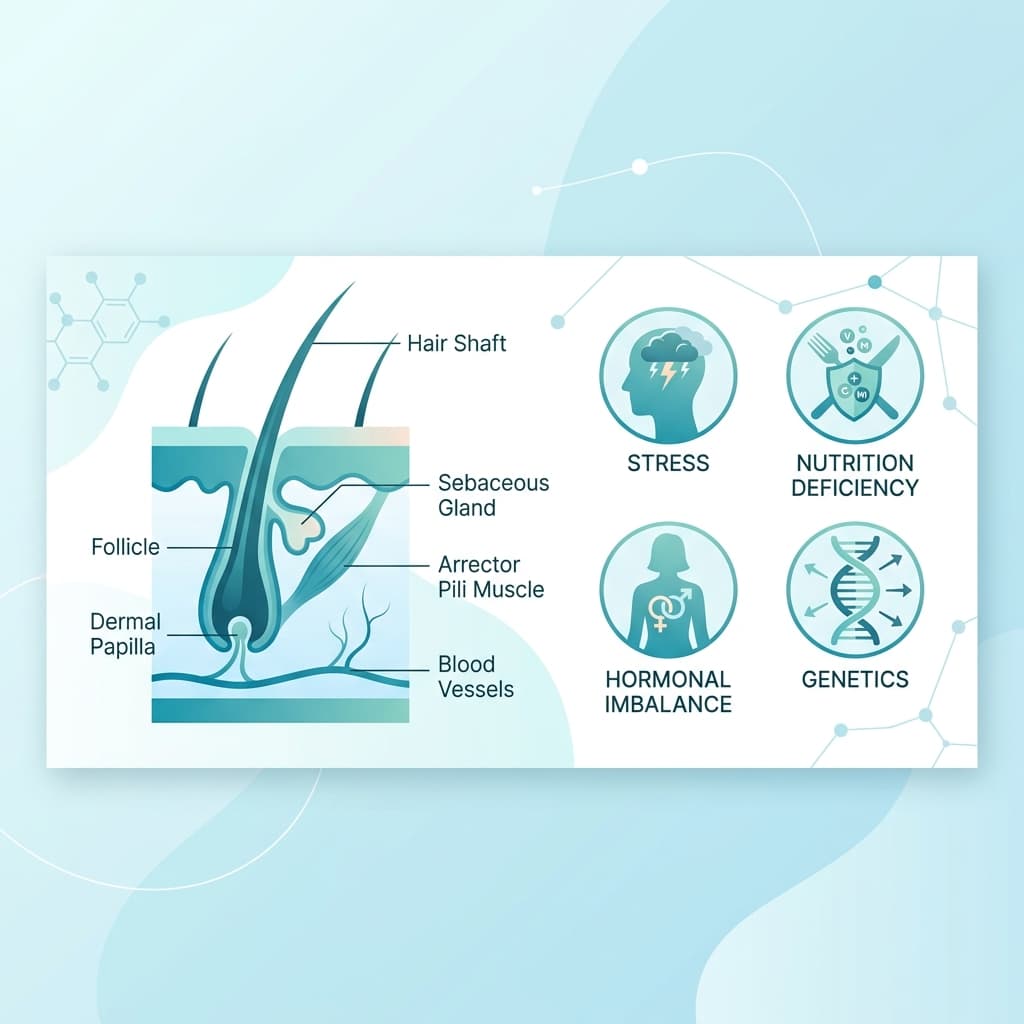
Oil cannot reach the hair follicle's dermal papilla (the living growth center buried 4mm deep in the dermis), it cannot alter your DHT hormone levels, it cannot correct an iron deficiency, and it cannot reactivate a miniaturized follicle. If your hair fall is caused by androgenetic alopecia, thyroid dysfunction, PCOS, or nutritional deficiency, no amount of oil — applied daily or weekly — will stop it.
CLINICAL CONCERN: Over-oiling the scalp (leaving oil overnight daily, or applying heavy oils in hot, humid climates) can actually worsen hair fall by clogging hair follicle pores, promoting Malassezia fungal overgrowth, and triggering or worsening seborrheic dermatitis (dandruff with inflammation). Dermatologists frequently see patients whose hair fall increased after adopting daily oiling routines.
WHAT YOU SHOULD DO INSTEAD: Oiling 1–2 times per week with a light oil (coconut, almond, or argan) for 30–60 minutes before washing is perfectly fine as a cosmetic hair care step. But do not rely on it as a hair fall treatment. If you're losing more than 100 strands a day, get a proper dermatological evaluation.
Myth #2: Washing Hair Frequently Causes Hair Fall
THE MYTH: Shampooing your hair daily — or even every other day — weakens the roots and causes hair to fall out. Many Indians deliberately reduce their hair washing frequency to 1–2 times per week (or less), believing this will reduce hair fall.
THE SCIENCE: This is one of the most stubborn myths, and it persists because of a powerful observation bias. When you don't wash your hair for several days, loose telogen hairs (hairs that have already detached from the follicle and are sitting passively in the hair canal) accumulate. When you finally shampoo, all of these accumulated loose hairs come out at once — in the shower drain, on your hands, on the towel. It looks like the shampoo 'caused' massive hair fall. In reality, those hairs were already lost; washing simply freed them.
If you washed your hair every day, you'd see a much smaller number of hairs each time — the same total number, distributed across more washes. The act of shampooing, lathering, and rinsing does not damage the hair follicle. Hair follicles are anchored 4mm deep in the dermis and are held in place by the arrector pili muscle and surrounding connective tissue. No amount of surface washing can dislodge a hair that is still in its active growth (anagen) phase.
DERMATOLOGIST VERDICT: Regular shampooing (even daily, for oily scalps) is actually better for hair health than infrequent washing. A clean scalp is a healthy scalp. Accumulated sebum, dead skin cells, pollution, and product residue can clog follicles, promote fungal/bacterial growth, and cause inflammation — all of which genuinely damage hair.
WHAT YOU SHOULD DO INSTEAD: Wash your hair as often as your scalp needs. If your scalp is oily, wash daily or every other day with a mild, pH-balanced (pH 4.5–5.5), sulphate-free shampoo. If your scalp is dry, 2–3 times per week is sufficient. Never avoid washing because you're afraid of seeing hair in the drain.
Myth #3: Hair Fall Is Always Genetic — Nothing Can Be Done
THE MYTH: If your father or grandfather was bald, you're destined for the same fate, and nothing can stop it. Many people resign themselves to hair loss because they believe genetics = inevitable baldness.
THE SCIENCE: It's true that androgenetic alopecia (pattern hair loss) has a strong genetic component. The condition involves hair follicles that are genetically sensitive to DHT (dihydrotestosterone) — a derivative of testosterone — which causes progressive follicle miniaturization over time. Family history on both maternal and paternal sides is a significant risk factor.
However, genetics does NOT mean inevitability. Here's why: (1) Not all hair loss is genetic — more than 50% of patients presenting to dermatology clinics with hair fall have a treatable, non-genetic cause (iron deficiency, thyroid disorder, Vitamin D deficiency, PCOS, telogen effluvium from stress, medication side effects, or scalp infections). (2) Even for genetically mediated pattern hair loss, proven medical treatments can slow, halt, or partially reverse the process when started early.
Evidence-Based Treatments That Work for Genetic (Pattern) Hair Loss
Scroll table →| Treatment | How It Works | Efficacy Evidence | Important Notes |
|---|---|---|---|
| Minoxidil (Topical 2–5%) | Widens blood vessels around follicles; prolongs anagen (growth) phase; increases follicle size | FDA-approved; clinical trials show 30–40% increase in hair count after 6–12 months of consistent use | Must be used continuously — stopping causes regression within 3–6 months. Available over the counter. |
| Finasteride (Oral, 1mg — Men Only) | Blocks the enzyme 5-alpha reductase that converts testosterone to DHT, reducing scalp DHT by ~60% | FDA-approved; 83% of men maintained hair count, 66% had visible regrowth in clinical trials over 2 years | Prescription only. Not approved for women of childbearing age due to teratogenicity risk. Sexual side effects in ~2% of men. |
| PRP Therapy (Platelet-Rich Plasma) | Concentrated growth factors from your own blood are injected into the scalp to stimulate follicle activity | Multiple RCTs show improved hair density and thickness. Best results as adjunct to minoxidil/finasteride. | Requires 4–6 initial sessions, then maintenance every 3–6 months. Not a standalone cure for advanced baldness. |
| Low-Level Laser Therapy (LLLT) | Photobiomodulation stimulates mitochondrial activity in follicle cells, extending anagen phase | FDA-cleared devices. Meta-analyses show modest but statistically significant improvement in hair density. | Requires consistent use (3–4 times/week). Works best for early-stage thinning. |
| Hair Transplant (FUE/FUT) | DHT-resistant follicles from the back of the scalp are relocated to thinning areas | Permanent results for transplanted hairs. Gold standard for advanced pattern baldness (Norwood IV–VII). | Surgical procedure. Must continue medical therapy to protect non-transplanted native hair from further loss. |
WHAT YOU SHOULD DO INSTEAD: Don't assume your hair fall is genetic. Get a proper clinical evaluation with blood tests. If it IS genetic, start medical treatment early — the sooner you begin, the more hair you preserve. A follicle that is miniaturizing can be rescued; a follicle that has been dormant for years is much harder to revive.
Myth #4: Shaving Your Head Makes Hair Grow Back Thicker & Stronger
THE MYTH: If you shave your head completely, the hair that grows back will be thicker, denser, and stronger. Parents sometimes shave children's heads 'to improve hair quality,' and men shave their heads hoping for thicker regrowth.
THE SCIENCE: This myth has been scientifically debunked repeatedly, most notably in a landmark clinical study published in the Journal of Investigative Dermatology as far back as 1928 — and reconfirmed in modern studies. Shaving cuts the hair at the surface of the skin. It has absolutely no effect on the hair follicle (which sits 4mm below the skin surface), the rate of hair growth, the colour, or the thickness of the hair shaft produced.
So why does hair seem thicker after shaving? Two optical illusions are at play: (1) Blunt tip effect: A naturally grown hair tapers to a fine tip. When you shave, you create a blunt, flat cross-section at the cut end. As the hair grows out, this blunt end feels coarser and looks darker against the scalp than a tapered tip. (2) Uniform length effect: All hairs growing back simultaneously at the same short length creates an appearance of uniform density, which can look 'thicker' than longer hair of varying lengths.
WHAT YOU SHOULD DO INSTEAD: There is no cosmetic or medical benefit to shaving your head for hair thickness. If your hair is thin, consult a dermatologist to identify the cause and discuss evidence-based treatments.
Myth #5: Wearing Helmets Causes Baldness
THE MYTH: Wearing a helmet while riding a two-wheeler causes hair fall and baldness because the helmet 'suffocates' hair roots, traps sweat, and pulls hair. This myth is particularly dangerous in India because it gives people an excuse to avoid wearing helmets — a life-saving safety device.
THE SCIENCE: There is no scientific evidence that wearing a helmet causes androgenetic alopecia or any form of permanent hair loss. The hair follicle receives its oxygen and nutrient supply from the blood vessels in the dermis — not from surface air. A helmet cannot 'suffocate' your hair roots any more than wearing a hat, turban, or cap can.
What IS true is that a very tight, poorly fitting helmet that creates constant friction at the hairline — worn for hours daily over many years — could theoretically contribute to traction alopecia (mechanical hair loss from chronic pulling). But this is not 'the helmet causing baldness'; it's a specific type of frictional damage that applies equally to any tight headgear, hair ties, or braids. A properly fitting helmet worn during commutes poses zero risk to your hair.
PUBLIC SAFETY WARNING: Head injuries kill approximately 50,000 Indians every year. NOT wearing a helmet dramatically increases the risk of fatal head trauma in road accidents. The risk of losing your life far outweighs any cosmetic concern about hair. Always wear a properly fitted, ISI-certified helmet.
WHAT YOU SHOULD DO INSTEAD: Always wear a helmet. Choose one that fits well — not too tight, not too loose. Keep the inner lining clean (wash it regularly) to prevent sweat buildup and scalp hygiene issues. If you notice hairline thinning, consult a dermatologist — the cause is almost certainly hormonal or nutritional, not the helmet.
Myth #6: Hard Water Is the Main Reason for Hair Fall
THE MYTH: Hard water (water with high mineral content, particularly calcium and magnesium) is the primary cause of hair fall. Many people invest in expensive water softeners and shower filters believing it will solve their hair loss.
THE SCIENCE: Hard water can affect the cosmetic quality of your hair — the high mineral content can leave a film on the hair shaft, making it feel rough, dry, tangled, and dull. It can also make shampoo less effective (poor lather). Over time, this can increase mechanical breakage during combing and styling, and hard water can worsen existing scalp conditions like eczema or dermatitis.
However, hard water does not damage the hair follicle itself, does not cause follicle miniaturization, and does not cause androgenetic alopecia, telogen effluvium, or any form of medical hair loss. A large-scale study published in the International Journal of Trichology found no statistically significant difference in hair tensile strength between subjects using hard water versus soft water.
If you're experiencing genuine hair fall (more than 100 strands/day, visible thinning, widening part line), hard water is almost certainly not the primary cause. It might be making your existing hair look worse, but the underlying cause lies elsewhere.
WHAT YOU SHOULD DO INSTEAD: If hard water is affecting your hair texture, a basic shower filter or a weekly chelating/clarifying shampoo can remove mineral buildup. But don't spend lakhs on water softening systems expecting it to stop hair fall. Get a dermatological evaluation to find the real cause.
Myth #7: Home Remedies (Onion Juice, Egg Masks, Aloe Vera) Can Cure Hair Loss
THE MYTH: Natural home remedies like onion juice, egg masks, curry leaf paste, methi (fenugreek) soaks, aloe vera gel, or green tea rinses can stop hair fall and regrow lost hair. Social media is full of dramatic 'before and after' claims.
THE SCIENCE: Let's address the most popular ones individually:
Scientific assessment of popular home remedies:
- Onion juice: One small study (Journal of Dermatology, 2002) showed some benefit for alopecia areata (an autoimmune condition causing patchy bald spots) — but the study was tiny (23 patients), unblinded, and has never been replicated in a rigorous trial. Onion juice contains sulphur compounds that may have mild anti-inflammatory and antimicrobial effects on the scalp. However, there is zero evidence that it works for androgenetic alopecia, which is the most common cause of hair loss. It can also cause severe contact dermatitis, burning, and redness.
- Egg masks: Eggs contain protein and biotin, but applying them topically does NOT deliver these nutrients to the follicle. Nutrients are absorbed through the gut and bloodstream, not through the skin surface. Egg masks are essentially a hair conditioning treatment, not a medical remedy.
- Aloe vera: Has mild anti-inflammatory and moisturizing properties. Can soothe an irritated scalp and improve hair texture. Does not stop hair fall caused by hormones, nutritional deficiency, or autoimmune conditions.
- Methi (Fenugreek) soaks: Contains plant proteins and lecithin that can condition the hair shaft. No clinical evidence for preventing follicle miniaturization or treating pattern hair loss.
- Rice water rinses: Trending on social media. Contains inositol (a carbohydrate) that can temporarily reduce surface friction and improve shine. No evidence for hair regrowth or stopping medical hair loss.
- Curry leaves / Bhringraj: Used extensively in Ayurveda. Some in-vitro studies show antioxidant properties. No high-quality clinical trials demonstrating efficacy for stopping human hair loss in a controlled setting.
THE BOTTOM LINE: Most home remedies are harmless scalp and hair conditioners. They can improve how your hair feels and looks, but they cannot treat the medical cause of hair loss. The danger is not in using them — it's in using them instead of proper medical treatment, delaying diagnosis by months or years while follicles are irreversibly lost.
WHAT YOU SHOULD DO INSTEAD: You can use gentle home remedies as part of your hair care routine for cosmetic benefits. But if you're experiencing progressive hair thinning, treat it as a medical issue, not a DIY project. See a dermatologist.
Myth #8: Dandruff Causes Permanent Hair Loss
THE MYTH: Dandruff (flaking, itchy scalp) directly kills hair follicles and causes permanent baldness. People with chronic dandruff often panic, believing they're going bald because of the flaking.
THE SCIENCE: Mild dandruff (pityriasis capitis) — simple flaking without significant inflammation — does not cause hair loss. The flakes are simply dead skin cells being shed from the outer layer of the scalp skin. This is a cosmetic issue, not a hair-loss issue.
However, severe seborrheic dermatitis — which is dandruff's more aggressive cousin, involving intense redness, inflammation, yellow greasy scales, and itching — CAN cause temporary hair shedding. The inflammation around the hair follicle disrupts the growth cycle and can cause telogen effluvium. Chronic scratching can also physically damage hair roots. The key word here is temporary — once the seborrheic dermatitis is treated (with medicated shampoos containing ketoconazole, zinc pyrithione, or selenium sulphide, and sometimes topical steroids), the inflammation resolves and hair regrows.
Similarly, scalp psoriasis and fungal scalp infections (tinea capitis) can cause hair shedding in affected areas, but these are also treatable and the hair loss is usually reversible.
WHAT YOU SHOULD DO INSTEAD: Don't panic about dandruff causing baldness — but don't ignore severe scalp inflammation either. Use a medicated anti-dandruff shampoo 2–3 times per week. If symptoms persist despite over-the-counter treatment, see a dermatologist for proper diagnosis (it might be psoriasis or fungal infection, not simple dandruff).
Myth #9: Only Men Experience Significant Hair Loss
THE MYTH: Hair loss is a 'male problem.' Women don't go bald. Female hair thinning is just 'normal aging' and doesn't need treatment.
THE SCIENCE: This is dangerously wrong. Female pattern hair loss (FPHL) affects approximately 40% of women by age 50 and up to 75% of women over age 65. It's actually more emotionally devastating for women because society associates female identity more strongly with hair than male identity.
FPHL presents differently from male pattern baldness — women typically experience diffuse thinning along the central part (the 'Christmas tree pattern') rather than a receding hairline. The frontal hairline is usually preserved. This different pattern means many women (and their families) don't even recognize it as hair loss until it's advanced.
Beyond pattern hair loss, women are disproportionately affected by several other hair-loss conditions: iron deficiency anaemia (due to menstruation), thyroid disorders (8x more common in women), PCOS (affecting 1 in 5 Indian women), postpartum telogen effluvium, and autoimmune alopecia areata (slightly more common in women).
WHAT YOU SHOULD DO INSTEAD: If you're a woman experiencing hair thinning, take it seriously. It's not 'just aging.' Get a blood panel (CBC, ferritin, thyroid, Vitamin D, B12, hormonal panel for PCOS) and a dermatological evaluation. FDA-approved treatment options for women include topical minoxidil (2%), spironolactone (anti-androgen), and PRP therapy.
Myth #10: Expensive 'Anti-Hair Fall' Shampoos Can Stop Hair Loss
THE MYTH: Premium shampoos marketed as 'anti-hair fall,' 'hair strengthening,' or 'hair growth' formulas can treat hair loss. Brands spend crores on advertising claiming their shampoo 'reduces hair fall by 97%' or contains 'hair growth molecules.'
THE SCIENCE: A shampoo is a rinse-off product that stays on your scalp for 60–120 seconds before being washed away. In that brief contact time, it's physically impossible for any active ingredient to penetrate 4mm into the dermis and affect the hair follicle's growth cycle. A shampoo's primary function is cleansing — removing dirt, sebum, and dead cells from the scalp surface.
The 'reduces hair fall' claims on shampoo bottles typically refer to hair breakage during combing, not actual follicle-level hair loss. By conditioning and smoothing the hair cuticle, these shampoos reduce mechanical breakage — which is a cosmetic benefit, not a medical hair loss treatment. The fine print on most of these products says 'reduces hair fall due to breakage' — not 'stops hair loss.'
The only topically applied product with FDA approval for treating hair loss is Minoxidil — and it's a leave-on treatment (you apply it and don't rinse it off), not a shampoo. Some medicated shampoos containing ketoconazole (2%) have shown a mild anti-androgen effect on the scalp in studies, but even these are adjuncts to primary treatment, not standalone cures.
WHAT YOU SHOULD DO INSTEAD: Choose a mild, pH-balanced shampoo that suits your scalp type. Don't overspend on 'anti-hair fall' marketing. If you want a medicated option, ask your dermatologist about ketoconazole shampoo as part of a broader treatment plan.
Myth #11: Applying More Hair Products (Gel, Serum, Spray) Causes Hair Loss
THE MYTH: Using hair styling products — gels, serums, hair sprays, mousse, or leave-in conditioners — 'clogs the scalp pores' and causes hair to fall out.
THE SCIENCE: Modern hair styling products are formulated to coat the hair shaft, not the scalp. When used as directed (applied to the hair, not massaged into the scalp), they do not penetrate the follicle or obstruct hair growth. They also don't reach the dermal papilla or interfere with hair growth signaling.
That said, there are legitimate concerns: (1) Products that are heavily applied directly to the scalp (rather than the hair) and not washed out regularly can lead to product buildup, scalp irritation, and folliculitis (inflamed follicles). (2) Some products contain alcohol or harsh chemicals that can dry and damage the hair shaft, increasing breakage. (3) Tight hairstyles held in place by products (slicked-back styles, tight gelled ponytails) can contribute to traction alopecia.
WHAT YOU SHOULD DO INSTEAD: Use styling products on the hair shaft, not the scalp. Choose alcohol-free formulations when possible. Wash your hair regularly to remove product buildup. Avoid hairstyles that create constant tension on the hairline.
Myth #12: Stress Doesn't Really Cause Hair Loss — It's Just an Excuse
THE MYTH: People blame stress for everything. Stress can't actually cause your hair to fall out — it's either genetic or something physical.
THE SCIENCE: This myth is the opposite of reality. Stress is one of the most well-documented medical causes of acute hair loss. Severe physical or emotional stress triggers a condition called Telogen Effluvium — and the mechanism is clearly understood:
How stress causes measurable hair loss:
- Acute stress activates the hypothalamic-pituitary-adrenal (HPA) axis, flooding the body with cortisol (the stress hormone).
- Elevated cortisol prematurely shifts a large proportion of hair follicles from the Anagen (growth) phase to the Telogen (resting/shedding) phase.
- Normally, only 10–15% of your hair is in telogen at any time. During telogen effluvium, this can spike to 30–50% — meaning 2–5 times more hair enters the shedding phase simultaneously.
- There is a characteristic 2–4 month delay between the stressful event and the hair fall — which is why many patients don't connect the two. You experience a bereavement in March, and your hair starts falling dramatically in June.
- Common triggers include: major surgery, high fever (including post-COVID hair fall), emotional trauma, death of a loved one, financial crisis, crash dieting, childbirth, chronic sleep deprivation, and prolonged work burnout.
THE GOOD NEWS: Telogen effluvium from stress is almost always temporary and fully reversible. Once the stressor is resolved (or the body adapts), the hair growth cycle normalizes, and complete regrowth occurs within 6 to 12 months. No specific hair treatment is needed — just addressing the stress itself, ensuring adequate nutrition, and being patient.
WHAT YOU SHOULD DO INSTEAD: Take stress seriously as a hair loss trigger. If you've experienced a major stressor in the past 2–6 months and are now shedding heavily, telogen effluvium is the likely cause. See a dermatologist to confirm the diagnosis and rule out other contributing factors. Prioritize sleep, nutrition, and stress management.
Myth #13: Hair Supplements & Biotin Pills Will Definitely Regrow Hair
THE MYTH: Taking biotin tablets, multivitamin 'hair growth' capsules, or branded hair supplements will stop hair fall and regrow lost hair. The supplement industry aggressively markets these products with compelling before/after imagery.
THE SCIENCE: Biotin (Vitamin B7) is a real nutrient that plays a genuine role in keratin synthesis (the protein that makes up hair). However, actual biotin deficiency is extremely rare in people eating a normal diet — biotin is found abundantly in eggs, nuts, seeds, salmon, meat, and many other foods. Your gut bacteria also produce biotin.
If you are NOT biotin deficient, taking extra biotin will not make your hair grow faster, thicker, or stop it from falling out. There is no high-quality clinical evidence that biotin supplementation helps hair growth in people with normal biotin levels. Most 'hair growth supplements' contain a cocktail of biotin, zinc, iron, Vitamin D, and saw palmetto — nutrients that only help if you're deficient in them.
IMPORTANT LAB ALERT: High-dose biotin supplementation (common in hair supplements — often 5,000–10,000 μg per day, which is 100–200x the daily requirement) can cause false results on blood tests, including thyroid panels and cardiac troponin tests. This can lead to misdiagnosis of thyroid disorders or even missed heart attacks. Always inform your doctor if you're taking biotin supplements before any blood test.
WHAT YOU SHOULD DO INSTEAD: Don't blindly pop hair supplements. Get a blood test first — check your ferritin, Vitamin D, B12, zinc, and thyroid levels. Supplement only what you're actually deficient in, at the dose recommended by your doctor. For most people, a balanced diet provides all the biotin they need.
Myth #14: Cutting Hair Frequently Makes It Grow Faster
THE MYTH: Getting regular haircuts or trimming your hair frequently stimulates faster growth. Some people get their hair cut monthly believing it accelerates growth.
THE SCIENCE: Hair grows from the follicle (at the root, under the skin), not from the tip. Cutting the tip of the hair shaft has absolutely no communication with or effect on the follicle 4mm below the skin surface. The follicle doesn't 'know' that the hair above has been cut. Hair growth rate is determined by genetics, hormones, nutrition, and blood supply to the follicle — none of which are affected by cutting.
The average hair growth rate is approximately 1 to 1.5 cm per month regardless of how often you cut it. What trimming DOES help with is removing split ends. If you never trim, split ends can travel up the hair shaft, weakening it and causing breakage — which can make hair appear thinner and shorter than it should be. Regular trims every 6–8 weeks prevent this breakage and help you retain length more effectively.
WHAT YOU SHOULD DO INSTEAD: Trim your hair every 6–8 weeks to prevent split end damage and maintain healthy-looking hair. But don't expect trimming to accelerate growth or reduce hair fall.
Myth #15: Hair Fall Means You Have a Serious Disease
THE MYTH: Excessive hair fall always signals a serious, life-threatening disease. This myth causes extreme anxiety, leading people to either panic and over-investigate or, paradoxically, avoid the doctor entirely out of fear.
THE SCIENCE: The vast majority of hair fall cases are caused by benign, treatable conditions — not cancer, not organ failure, not life-threatening illness. The most common causes, in clinical practice, are:
Most Common Causes of Hair Fall in Dermatology Practice
Scroll table →| Cause | Approximate Frequency | Serious? | Treatable? |
|---|---|---|---|
| Androgenetic Alopecia (Pattern Hair Loss) | 40–50% of patients | No — cosmetic, not dangerous | Yes — slowed/reversed with medical treatment |
| Telogen Effluvium (Stress / Illness / Post-COVID) | 20–25% of patients | No — self-resolving in 6–12 months | Yes — resolves on its own once trigger is addressed |
| Nutritional Deficiency (Iron, Vitamin D, B12) | 15–20% of patients | No — easily correctable | Yes — supplementation restores hair growth |
| Thyroid Disorders | 5–10% of patients | Manageable, not life-threatening | Yes — thyroid medication normalizes hair cycle |
| PCOS (in women) | 5–10% of female patients | Manageable chronic condition | Yes — hormonal and lifestyle management |
| Alopecia Areata (Autoimmune) | 2–5% of patients | Not dangerous, but unpredictable | Yes — immunotherapy, corticosteroids, JAK inhibitors |
| Scalp Infections / Dermatitis | 3–5% of patients | No — infectious/inflammatory, not dangerous | Yes — antifungals, medicated shampoos, topical steroids |
In rare cases, hair loss CAN be a symptom of systemic conditions like lupus (autoimmune), syphilis (secondary stage), or side effect of chemotherapy — but these are uncommon and are usually accompanied by many other obvious symptoms.
WHAT YOU SHOULD DO INSTEAD: Don't panic, but don't ignore it either. Treat hair fall as a medical symptom that deserves a proper clinical evaluation — just like you'd investigate persistent fatigue or unexplained weight loss. In the vast majority of cases, the cause will be benign and treatable.
Quick-Reference Myth vs. Fact Summary Table
15 Hair Fall Myths vs. Dermatologist-Verified Facts at a Glance
Scroll table →| # | The Myth | The Medical Fact | Verdict |
|---|---|---|---|
| 1 | Daily oiling prevents hair fall | Oil conditions the hair shaft but cannot treat follicle-level hair loss | Myth ❌ |
| 2 | Shampooing causes hair fall | Washing frees already-shed telogen hairs; regular washing promotes scalp health | Myth ❌ |
| 3 | Genetic hair loss can't be treated | FDA-approved treatments (minoxidil, finasteride, PRP) can slow/reverse genetic hair loss | Myth ❌ |
| 4 | Shaving makes hair thicker | Shaving has zero effect on follicle or hair thickness — it's an optical illusion | Myth ❌ |
| 5 | Helmets cause baldness | No evidence that helmets cause hair loss; they save lives | Myth ❌ |
| 6 | Hard water is the main cause | Hard water affects hair texture, not the follicle; won't cause medical hair loss | Myth ❌ |
| 7 | Home remedies cure hair loss | Most are harmless conditioners with no clinical evidence for treating follicle-level hair loss | Myth ❌ |
| 8 | Dandruff causes permanent hair loss | Mild dandruff doesn't cause hair loss; severe inflammation causes temporary, treatable shedding | Myth ❌ |
| 9 | Only men lose hair | 40% of women experience significant hair thinning by age 50 | Myth ❌ |
| 10 | Expensive shampoos stop hair fall | Shampoo is a rinse-off cleanser; it cannot treat follicle-level hair loss | Myth ❌ |
| 11 | Hair products cause hair fall | Products applied to hair (not scalp) don't damage follicles | Myth ❌ |
| 12 | Stress can't really cause hair loss | Stress-induced telogen effluvium is one of the most well-documented causes of acute hair fall | Myth ❌ |
| 13 | Biotin pills will definitely regrow hair | Only helps if you're actually biotin deficient — which is rare in normal diets | Myth ❌ |
| 14 | Cutting hair makes it grow faster | Hair grows from the follicle, not the tip; cutting has no effect on growth rate | Myth ❌ |
| 15 | Hair fall means serious disease | The vast majority of cases are benign, treatable conditions | Myth ❌ |
What Actually Works: Evidence-Based Approach to Hair Fall
Now that we've cleared away the myths, here's the evidence-based approach that dermatologists and trichologists actually recommend:
Proven, dermatologist-recommended steps for managing hair fall:
- Step 1 — Get a Clinical Diagnosis: See a dermatologist. Get a scalp examination, hair pull test, and targeted blood investigations (CBC, ferritin, thyroid panel, Vitamin D, B12, zinc, and hormonal panel if needed). Don't self-diagnose.
- Step 2 — Correct Nutritional Deficiencies: If blood tests reveal deficiencies in iron (ferritin < 40), Vitamin D (< 30 ng/mL), B12, or zinc — correct them with appropriate supplementation under medical guidance. This alone resolves hair fall in a significant percentage of patients.
- Step 3 — Treat the Underlying Condition: If thyroid dysfunction, PCOS, scalp infection, or autoimmune alopecia is identified — treat the root cause. Hair regrowth follows once the underlying condition is managed.
- Step 4 — Use Evidence-Based Topical/Oral Treatments: For androgenetic alopecia, discuss minoxidil (topical), finasteride (oral, men), spironolactone (oral, women), and PRP therapy with your dermatologist. These are the only treatments with robust clinical trial evidence.
- Step 5 — Optimize Scalp Health: Use a mild, pH-balanced shampoo. Keep your scalp clean. Treat dandruff or seborrheic dermatitis promptly. Avoid tight hairstyles that cause traction.
- Step 6 — Eat a Hair-Friendly Diet: Ensure adequate protein (dal, eggs, paneer, chicken, fish), iron-rich foods (spinach, beetroot, jaggery), and Vitamin C (amla, citrus fruits) for iron absorption. Include omega-3 sources (walnuts, flaxseeds, fatty fish).
- Step 7 — Manage Stress & Sleep: Prioritize 7–8 hours of sleep. Practice stress management (exercise, meditation, counseling). Remember: chronic stress directly causes telogen effluvium.
- Step 8 — Be Patient & Consistent: Hair growth is slow — approximately 1 cm/month. Any treatment needs a minimum of 3–6 months of consistent use before visible results. Don't switch treatments every few weeks expecting instant results.
When Should You See a Dermatologist?
Stop relying on myths and home remedies and consult a dermatologist or trichologist if you experience any of the following:
- More than 100 strands of hair loss per day for more than 3 weeks continuously
- Visible scalp showing through your hair or a widening central part line
- Sudden appearance of circular, smooth bald patches (alopecia areata)
- Hair thinning accompanied by irregular periods, acne, or unexplained weight changes
- Hair loss starting after a new medication, surgery, or major illness
- Scalp redness, scaling, itching, or painful bumps alongside hair loss
- Progressive hairline recession or crown thinning worsening over months
- You've tried multiple home remedies and OTC products for 3+ months with no improvement
Expert Hair Fall Care at Sanjivani Hospital, Virar
The Department of Dermatology at Sanjivani Hospital, Virar West, provides comprehensive, evidence-based hair fall evaluation, diagnosis, and treatment. Our dermatologists don't just prescribe — they investigate. Every patient receives a thorough scalp examination, targeted blood investigation panel, and a personalized treatment plan based on the actual diagnosed cause of their hair loss.
Our services include topical and systemic medical therapy, PRP (Platelet-Rich Plasma) treatment, nutritional counseling, and coordination with Gynecology and Endocrinology departments for hormonal causes like PCOS and thyroid disorders. We believe in treating the cause, not just the symptom — so you stop wasting money on products that don't work and start seeing real results.
To book a dermatology consultation for hair fall assessment at Sanjivani Hospital, Virar West, contact our reception desk or visit our OPD during regular consulting hours. Stop believing myths — start getting answers.