Every 14 seconds, someone in India searches for "am I depressed?" or "why do I feel anxious all the time?" on Google. Yet despite this overwhelming silent cry for help, mental health remains one of the most stigmatised and under-treated health conditions in the country. According to the Global Burden of Disease Study 2023, anxiety disorders in India have more than doubled since 1990 — a 123.5% increase that experts describe as nothing short of a public health crisis.
The numbers tell a devastating story: approximately 1 in 7 Indians — over 200 million people — lives with a diagnosable mental health condition. An estimated 56 million Indians suffer from depression, and 38 million from anxiety disorders. What makes this epidemic even more alarming is that 80–86% of those affected never receive any treatment at all. The reasons? Stigma, lack of awareness, shortage of mental health professionals (India has only 0.3 psychiatrists per 100,000 people, far below the WHO-recommended 1 per 100,000), and the deeply ingrained cultural belief that mental health issues are a sign of weakness or moral failing.
This guide is published ahead of World Mental Health Day 2026 (October 10) — a day dedicated to raising awareness and breaking the silence around mental health. Whether you're concerned about yourself, a loved one, or simply want to understand these conditions better, this comprehensive resource will walk you through everything: the warning signs you should never ignore, the science behind why anxiety and depression develop, evidence-based treatments, self-care strategies tailored to the Indian lifestyle, and a clear guide on when and how to seek professional help at Sanjivani Hospital, Virar.
What Are Anxiety and Depression? Understanding the Difference
Anxiety and depression are two of the most common mental health disorders worldwide, and while they are distinct conditions, they frequently co-occur — research shows that nearly 60% of people with anxiety also experience symptoms of depression, and vice versa. Understanding the difference between them is the first step toward getting the right help.
Anxiety disorders involve excessive, persistent worry, fear, or nervousness that is disproportionate to the actual situation. While everyone feels anxious occasionally — before an exam, a job interview, or a medical test — an anxiety disorder is characterised by worry that is constant, overwhelming, and interferes with daily life. Common types include Generalised Anxiety Disorder (GAD), Panic Disorder, Social Anxiety Disorder, and Phobias.
Depression (clinically called Major Depressive Disorder or MDD) is more than feeling sad or having a bad day. It is a persistent mood disorder that affects how you feel, think, and handle daily activities — from sleeping and eating to working and socialising. To be diagnosed with depression, symptoms must persist for at least two weeks and represent a change from your previous level of functioning.
Important Distinction: Feeling sad after a loss or stressed before a deadline is a normal human experience. A clinical disorder is diagnosed when these feelings become persistent (lasting weeks or months), disproportionate to the situation, and interfere with your ability to function in daily life — work, relationships, self-care, and social activities.
Types of Anxiety and Depressive Disorders
Classification of common anxiety and depressive disorders
Scroll table →| Disorder Category | Specific Type | Key Characteristic | Prevalence in India |
|---|---|---|---|
| Anxiety Disorders | Generalised Anxiety Disorder (GAD) | Persistent, excessive worry about everyday matters for 6+ months | 3–5% of population |
| Anxiety Disorders | Panic Disorder | Recurrent, unexpected panic attacks with intense physical symptoms | 1.5–3% of population |
| Anxiety Disorders | Social Anxiety Disorder | Intense fear and avoidance of social situations due to fear of judgement | 2–4% of population |
| Anxiety Disorders | Specific Phobias | Irrational, intense fear of specific objects or situations | 5–8% of population |
| Anxiety Disorders | Obsessive-Compulsive Disorder (OCD) | Intrusive thoughts (obsessions) and repetitive behaviours (compulsions) | 2–3% of population |
| Depressive Disorders | Major Depressive Disorder (MDD) | Persistent depressed mood or loss of interest for 2+ weeks | 4–5% of population |
| Depressive Disorders | Persistent Depressive Disorder (Dysthymia) | Chronic, low-grade depression lasting 2+ years | 1.5–2% of population |
| Depressive Disorders | Seasonal Affective Disorder (SAD) | Depression linked to seasonal changes, often in winter | Less common in tropical India |
| Depressive Disorders | Postpartum Depression | Depression occurring after childbirth, affecting mother-infant bonding | 15–20% of new mothers in India |
| Mixed | Mixed Anxiety-Depressive Disorder | Co-occurring anxiety and depression symptoms that don't fully meet criteria for either alone | Very common in primary care settings |
10 Warning Signs of Anxiety and Depression You Should Never Ignore
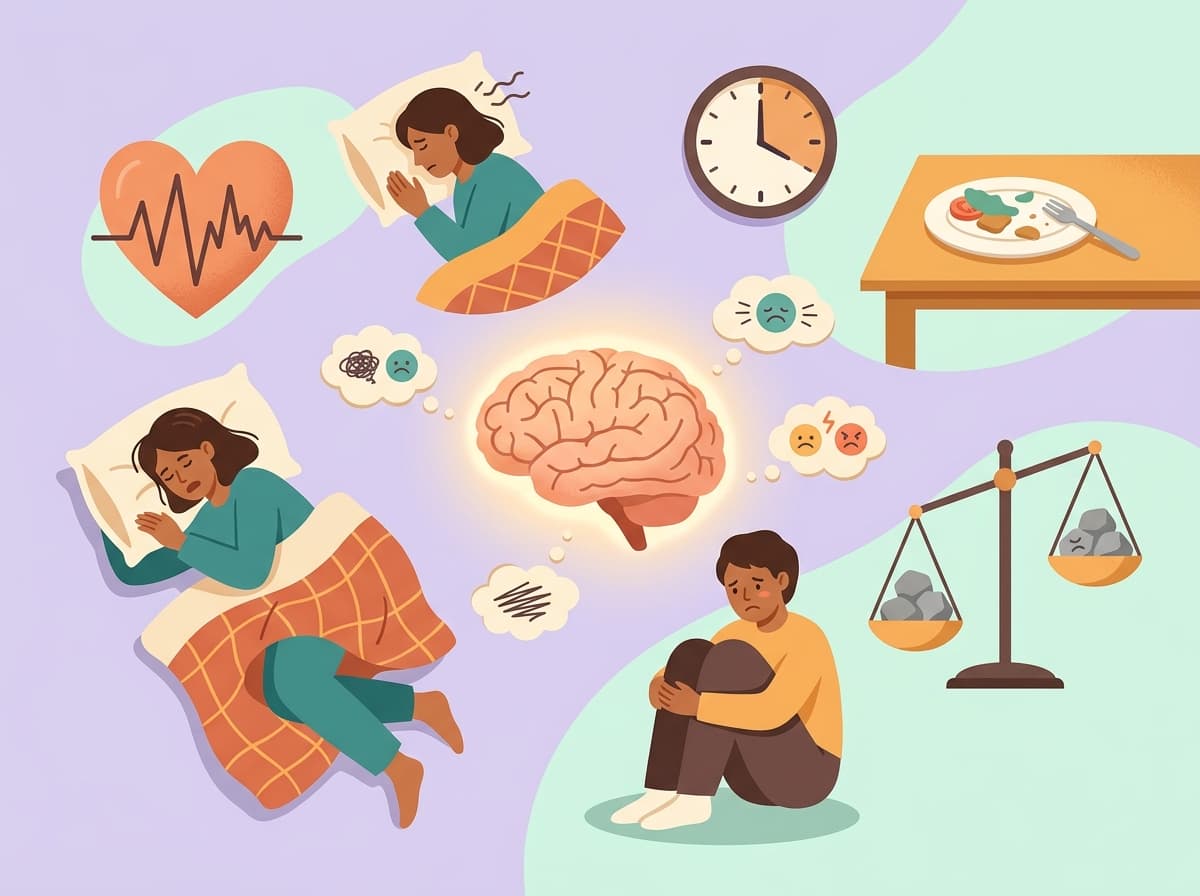
Recognising the warning signs early can make the difference between a manageable condition and a crisis. Here are the 10 most critical symptoms that indicate you or someone you know may be dealing with anxiety, depression, or both:
Key warning signs of anxiety and depression
- 1. Persistent Sadness or Emptiness — Feeling sad, hopeless, or emotionally "flat" most of the day, nearly every day, for two weeks or more. This isn't the normal sadness after a setback — it's a deep, pervasive feeling that doesn't lift even when good things happen. You may feel like there's a heavy weight on your chest that won't go away.
- 2. Excessive, Uncontrollable Worry — Worrying constantly about health, finances, family, work, or even everyday tasks like cooking or commuting. The worry feels impossible to stop, often spiralling from one concern to another. You may find yourself thinking "what if" scenarios for hours, unable to relax or focus on anything else.
- 3. Sleep Disturbances — This can manifest in two ways: insomnia (difficulty falling asleep, staying asleep, or waking up too early and not being able to go back to sleep) or hypersomnia (sleeping 10–14 hours and still feeling exhausted). Disrupted sleep is both a symptom and a driver of mental health conditions, creating a vicious cycle.
- 4. Unexplained Fatigue and Low Energy — Feeling physically drained, exhausted, or "heavy" even after a full night's rest. Simple tasks like showering, cooking dal-chawal, or walking to the local market feel like monumental efforts. This fatigue is not laziness — it is a neurochemical consequence of depleted serotonin and dopamine levels in the brain.
- 5. Panic Attacks and Physical Symptoms — Sudden episodes of intense fear accompanied by a racing heart (tachycardia), chest tightness, shortness of breath, dizziness, sweating, trembling, and a feeling of impending doom. Many people experiencing their first panic attack rush to the emergency room convinced they are having a heart attack.
- 6. Loss of Interest in Activities (Anhedonia) — Activities that once brought joy — cricket, cooking, watching films, spending time with family, festivals, or hobbies — no longer feel pleasurable or worth the effort. This symptom, called anhedonia, is one of the hallmark indicators of clinical depression.
- 7. Appetite and Weight Changes — Significant changes in appetite — either eating much less ("I just don't feel hungry") or stress-eating / emotional eating (craving high-sugar, high-fat comfort foods). Unexplained weight loss or gain of 5% or more of body weight within a month is a clinical red flag.
- 8. Difficulty Concentrating and Making Decisions — Persistent brain fog, inability to focus at work or studies, forgetting appointments, losing track of conversations, and feeling indecisive about even small choices like what to wear or what to eat. Students may see a sudden drop in academic performance; professionals may miss deadlines or make uncharacteristic errors.
- 9. Social Withdrawal and Isolation — Gradually pulling away from friends, family, and social gatherings. Declining invitations, avoiding phone calls, skipping family functions or festivals, preferring to stay alone in your room. In Indian culture, this is often dismissed as the person being "moody" or "reserved," but consistent withdrawal is a serious warning sign.
- 10. Thoughts of Self-Harm or Worthlessness — Persistent feelings that you are a burden to your family, that nothing will ever get better, or that the world would be better off without you. Any thoughts of self-harm or suicide, no matter how fleeting, require immediate professional attention.
🚨 Emergency Warning — Seek Help Immediately If: You or someone you know is experiencing thoughts of suicide, has a plan to harm themselves, or has made a suicide attempt. Call the Vandrevala Foundation Helpline: 1860-2662-345 (24/7), iCall: 9152987821, or go directly to the nearest hospital emergency room. At Sanjivani Hospital, our Psychiatry Department provides immediate crisis support.
Causes and Risk Factors: Why Do Anxiety and Depression Develop?
Anxiety and depression are not caused by a single factor — they result from a complex interplay of biological, psychological, and social factors. Understanding these causes can help remove the stigma and guilt that often surrounds mental health conditions. You did not "choose" to be anxious or depressed, and it is not a character flaw.
Causes and risk factors for anxiety and depression
- Brain Chemistry Imbalance — Neurotransmitters like serotonin, dopamine, norepinephrine, and GABA regulate mood, sleep, appetite, and stress response. An imbalance in these chemicals — often genetically influenced — can directly cause anxiety and depression. This is why medication can be so effective: it helps restore these chemical levels.
- Genetic Predisposition — If a first-degree relative (parent or sibling) has anxiety or depression, your risk increases by 2–3 times. Studies of identical twins show that depression has a heritability of approximately 40–50%, meaning genes play a significant but not absolute role.
- Chronic Stress — Prolonged exposure to stress — from demanding jobs, financial difficulties, family conflicts, exam pressure, or caregiving responsibilities — keeps the body's cortisol (stress hormone) levels chronically elevated, which gradually damages brain circuits responsible for mood regulation.
- Traumatic Life Events — Childhood abuse, neglect, domestic violence, loss of a loved one, divorce, serious illness, or natural disasters can trigger or worsen anxiety and depression. In India, issues like early marriage, dowry-related stress, and societal pressure are significant but often unrecognised triggers.
- Chronic Physical Illness — Conditions like diabetes, thyroid disorders, heart disease, chronic pain, PCOD/PCOS, and cancer are strongly linked with higher rates of depression and anxiety. The relationship is bidirectional: chronic illness causes depression, and depression worsens physical health outcomes.
- Hormonal Changes — Puberty, menstruation (PMDD), pregnancy, postpartum period, perimenopause, and menopause can all trigger significant mood changes due to fluctuations in oestrogen, progesterone, and thyroid hormones. Postpartum depression affects an estimated 15–20% of new mothers in India.
- Substance Use — Excessive alcohol consumption, tobacco, recreational drugs, and even excessive caffeine can alter brain chemistry and worsen or trigger anxiety and depression. Alcohol is a depressant that may provide temporary relief but significantly worsens symptoms over time.
- Social Media and Screen Time — Studies show a strong correlation between excessive social media use (3+ hours daily) and increased rates of anxiety and depression, particularly among young Indians aged 18–30. Constant comparison, cyberbullying, and disrupted sleep from screen exposure contribute to this link.
- Loneliness and Social Isolation — Living alone, working remotely without social interaction, migrating to a new city for work, or being in a relationship where you feel emotionally unsupported are significant risk factors. India's rapid urbanisation has led to a dramatic rise in nuclear families and social isolation.
- Nutritional Deficiencies — Low levels of Vitamin D, Vitamin B12, iron, omega-3 fatty acids, and magnesium are clinically linked to higher rates of depression and anxiety. A 2024 ICMR study found that over 70% of Indians are Vitamin D deficient, which directly impacts serotonin production.
- Sleep Deprivation — Chronic poor sleep disrupts the brain's emotional regulation circuits. Research shows that people who regularly sleep fewer than 6 hours per night have a 2.5x higher risk of developing depression and a 3x higher risk of developing an anxiety disorder.
- Personality Traits — Individuals who tend toward perfectionism, people-pleasing, catastrophic thinking, or low self-esteem are more vulnerable. While these traits are not "causes" per se, they create a psychological environment where anxiety and depression can take root more easily.
The Neuroscience: What Happens in Your Brain During Anxiety and Depression
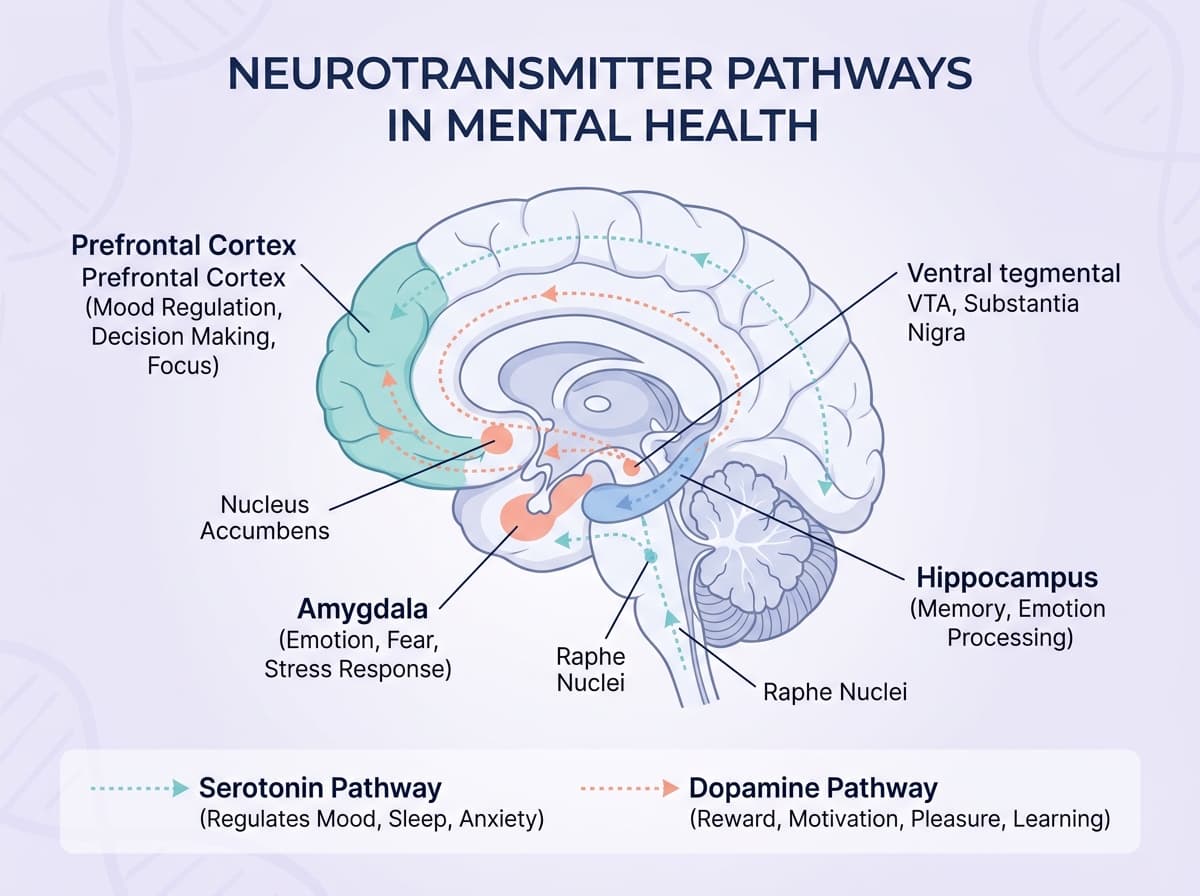
Understanding the brain science behind anxiety and depression can be incredibly empowering — it transforms these conditions from vague "emotional problems" into concrete, treatable medical conditions with identifiable biological mechanisms.
Three key brain regions are involved: the Prefrontal Cortex (responsible for rational thinking, decision-making, and emotion regulation — it becomes less active in depression), the Amygdala (the brain's fear centre — it becomes hyperactive in anxiety, triggering the "fight or flight" response even when there's no real danger), and the Hippocampus (involved in memory and emotional processing — chronic stress can actually shrink this region, contributing to the memory problems and brain fog experienced in depression).
The key neurotransmitters involved are: Serotonin (the "mood stabiliser" — low levels are linked to depression, anxiety, sleep problems, and appetite changes), Dopamine (the "reward chemical" — low levels cause anhedonia, lack of motivation, and difficulty experiencing pleasure), Norepinephrine (the "alertness chemical" — imbalances cause either hyper-alertness/panic or fatigue/apathy), and GABA (the "calming chemical" — low levels contribute to anxiety, restlessness, and inability to relax).
Self-Care Strategies: Evidence-Based Approaches for Indian Lifestyles
While professional treatment is essential for moderate-to-severe cases, there are several evidence-based self-care strategies that can significantly improve mild symptoms and complement formal treatment. These strategies are adapted for Indian lifestyles, food habits, and cultural context.
1. Physical Exercise — The Most Powerful Natural Antidepressant
Research consistently shows that regular physical exercise is as effective as antidepressant medication for mild-to-moderate depression. Exercise releases endorphins (natural painkillers and mood boosters), increases BDNF (a protein that helps grow new brain cells), and reduces cortisol levels. The minimum effective dose is 150 minutes of moderate exercise per week — that's just 30 minutes, 5 days a week. Walking in your colony, yoga, cycling, swimming, playing cricket or badminton, or even energetic garba during Navratri all count. Start with 10 minutes daily and gradually increase.
2. Sleep Hygiene — Resetting Your Body Clock
Poor sleep and mental health problems fuel each other in a vicious cycle. To break this cycle: maintain a consistent sleep schedule (same bedtime and wake time, even on weekends), avoid screens for at least 60 minutes before bed (blue light suppresses melatonin), keep your bedroom cool and dark, avoid tea/coffee after 4 PM, and try relaxation techniques like 4-7-8 breathing (inhale for 4 seconds, hold for 7, exhale for 8) before bed. Aim for 7–9 hours of sleep per night.
3. Mindfulness and Meditation — Training Your Brain to Be Present
India is the birthplace of meditation, and modern neuroscience has validated what ancient traditions knew: regular meditation physically changes the brain. Studies using brain imaging show that 8 weeks of daily meditation can increase grey matter density in the prefrontal cortex and hippocampus, and shrink the amygdala — literally making your brain more resilient to stress and anxiety. Start with just 5 minutes of guided meditation daily using apps like Headspace, Calm, or the free Insight Timer. Pranayama (breathing exercises), particularly Anulom Vilom and Bhramari, have shown measurable anxiety-reducing effects in clinical trials.
4. Social Connection — The Antidote to Isolation
Depression tells you to isolate; recovery requires connection. Even when you don't feel like it, maintaining social bonds is one of the most protective factors against mental health deterioration. This doesn't mean attending large gatherings — it can be as simple as having chai with a neighbour, calling a friend for 10 minutes, joining a local walking group, volunteering at a nearby temple, mosque, or community centre, or participating in a hobby class. In Indian culture, joint family systems and community ties have traditionally been protective — nurture these connections.
5. Journaling and Emotional Expression
Writing down your thoughts and feelings for just 15–20 minutes daily has been shown to reduce symptoms of anxiety and depression by up to 25% in clinical studies. You don't need to write eloquently — simply dump your thoughts onto paper. Try the "3 Good Things" exercise: each night before bed, write down 3 positive things that happened during the day, no matter how small ("the chai was good", "my colleague smiled at me", "I finished a task on time"). Research from the University of Pennsylvania shows this simple practice can significantly reduce depression scores within just 2 weeks.
6. Limiting Social Media and News Consumption
If you find yourself endlessly scrolling through Instagram reels, doom-scrolling negative news on Twitter/X, or comparing your life to carefully curated posts on Facebook, it's time to set boundaries. Reduce social media to under 30 minutes per day, turn off non-essential notifications, unfollow accounts that make you feel inadequate, and designate "phone-free" times — especially during meals and the first and last hour of your day.
7. Structured Daily Routine
Depression thrives on chaos and inactivity. Creating a simple, predictable daily structure — even a basic one that includes fixed wake-up and sleep times, meals, a brief walk, and one small productive task — can provide a sense of purpose and control. Don't aim for a perfect schedule; aim for a "good enough" one that gets you out of bed and moving. Behavioural Activation (a core component of CBT) is based on this principle: action often precedes motivation, not the other way around.
Dietary Recommendations: Foods That Help (and Hurt) Your Mental Health
The gut-brain connection is one of the most exciting areas of mental health research. Your gut produces approximately 90% of your body's serotonin, and the composition of your gut microbiome directly influences your mood and anxiety levels. What you eat matters enormously for your mental health.
Foods to eat and avoid for better mental health
Scroll table →| ✅ Foods That Help (Include Daily) | ❌ Foods That Hurt (Limit or Avoid) |
|---|---|
| Omega-3 rich foods — walnuts (akhrot), flaxseeds (alsi), chia seeds, fatty fish (rawas/surmai) | Refined sugar — mithai, cold drinks, packaged juices, biscuits, white bread |
| Fermented foods — homemade dahi, buttermilk (chaas), idli, dosa batter, pickles (achaar) | Processed/junk food — chips, instant noodles, ready-to-eat meals, bakery items |
| Dark leafy greens — palak (spinach), methi (fenugreek), sarson (mustard greens) | Excessive caffeine — more than 2 cups of chai/coffee per day can worsen anxiety |
| Whole grains — brown rice, jowar roti, bajra roti, oats, ragi | Alcohol — a depressant that worsens both anxiety and depression significantly |
| Protein-rich foods — moong dal, chana, rajma, paneer, eggs, chicken, soy | Maida (refined flour) — pav, naan, pizza, samosa, puri made with maida |
| Nuts and seeds — almonds (badam), cashews (kaju), pumpkin seeds (magaz) | Trans fats — deep-fried street food (vada pav, bhajiya) when consumed frequently |
| Fruits rich in antioxidants — amla, pomegranate (anar), banana (kela), papaya | Excessive salt — papad, pickles in large quantities, processed snacks |
| Turmeric (haldi) — contains curcumin, a powerful anti-inflammatory that crosses the blood-brain barrier | Artificial sweeteners and additives — diet sodas, sugar-free products with aspartame |
Pro Tip: The "Sattvic" Diet Connection — Traditional Ayurvedic dietary principles align remarkably well with modern mental health nutrition science. A sattvic diet — rich in fresh fruits, vegetables, whole grains, nuts, ghee, and milk — naturally provides the nutrients needed for optimal brain function. Consider adding a daily "golden milk" (haldi doodh) before bed: warm milk with turmeric, a pinch of black pepper (to enhance curcumin absorption), and a touch of honey. This traditional Indian remedy has demonstrated anti-inflammatory and antidepressant properties in peer-reviewed studies.
When to See a Doctor: Don't Wait for a Crisis
Many Indians delay seeking mental health help because of stigma, cost concerns, or the belief that they should "just be strong." But mental health conditions are medical illnesses — just like diabetes or hypertension — and they respond to treatment. Here are clear indicators that it's time to consult a psychiatrist or clinical psychologist:
When to seek professional mental health help
- Symptoms persist for more than 2 weeks and are not improving on their own
- Your daily functioning is impaired — you're missing work, avoiding social situations, neglecting hygiene, or unable to fulfil family responsibilities
- You've experienced a panic attack — even one episode warrants a professional evaluation to prevent recurrence
- Sleep disturbance is chronic — if you haven't had a restful night's sleep in weeks despite trying self-care strategies
- You're using alcohol, tobacco, or substances to cope with emotional pain
- Your relationships are suffering — increased irritability, arguments with spouse/parents/children, or emotional numbness toward people you love
- You're having thoughts of self-harm or suicide — this is a medical emergency and requires immediate help
- A loved one has expressed concern — sometimes the people around us notice changes before we do. If multiple people have gently suggested you "don't seem like yourself," take it seriously
Remember: Seeking help is a sign of strength, not weakness. A trained psychiatrist or psychologist can help you feel better faster and prevent the condition from worsening. Early intervention leads to significantly better outcomes — most people with anxiety and depression who receive proper treatment show meaningful improvement within 6–12 weeks.
Medical and Therapeutic Treatments: What Science Offers Today
Modern psychiatry offers highly effective treatments for anxiety and depression. Treatment is typically customised based on the type, severity, and individual patient needs. Here's a comprehensive overview of available options:
Psychotherapy (Talk Therapy)
Types of psychotherapy for anxiety and depression
Scroll table →| Therapy Type | How It Works | Best For | Duration | Effectiveness |
|---|---|---|---|---|
| Cognitive Behavioural Therapy (CBT) | Identifies and restructures negative thought patterns and behaviours; teaches coping skills | Anxiety disorders, mild-moderate depression, panic disorder, OCD | 12–20 sessions (weekly) | 70–80% response rate; considered gold standard |
| Behavioural Activation (BA) | Focuses on increasing engagement in positive, meaningful activities to break the cycle of withdrawal | Depression with significant anhedonia and social withdrawal | 8–15 sessions | Comparable to CBT for depression |
| Interpersonal Therapy (IPT) | Addresses relationship problems, grief, role transitions, and social skill deficits | Depression triggered by life changes, relationship issues, postpartum depression | 12–16 sessions | Very effective for interpersonal triggers |
| Mindfulness-Based Cognitive Therapy (MBCT) | Combines CBT with mindfulness meditation to prevent relapse | Recurrent depression (3+ episodes), anxiety with rumination | 8-week group programme | Reduces relapse risk by 40–50% |
| Psychodynamic Therapy | Explores unconscious patterns, early life experiences, and emotional conflicts | Complex, long-standing conditions with childhood roots | Months to years | Effective for deep-seated patterns |
Medication Options
Common medications for anxiety and depression
Scroll table →| Medication Class | Examples | How It Works | Onset Time | Key Considerations |
|---|---|---|---|---|
| SSRIs (First-line) | Escitalopram, Sertraline, Fluoxetine, Paroxetine | Increases serotonin availability in the brain | 2–4 weeks for full effect | Generally well-tolerated; may cause initial nausea, headache; non-addictive |
| SNRIs | Venlafaxine, Duloxetine, Desvenlafaxine | Increases both serotonin and norepinephrine | 2–4 weeks | Good for co-existing pain conditions; may increase BP slightly |
| Benzodiazepines (Short-term) | Clonazepam, Alprazolam, Lorazepam | Enhances GABA activity for rapid calming | Minutes to hours | For acute anxiety/panic only; risk of dependence — strictly short-term use |
| Atypical Antidepressants | Bupropion, Mirtazapine, Trazodone | Various mechanisms targeting different neurotransmitters | 2–6 weeks | Useful when SSRIs/SNRIs are not tolerated; some help with sleep or appetite |
| Beta-Blockers (Situational) | Propranolol | Blocks physical symptoms of anxiety (racing heart, trembling) | 30–60 minutes | Useful for performance anxiety, public speaking, exam anxiety |
⚠️ Critical Safety Note: NEVER start, stop, or change the dose of any psychiatric medication without consulting your prescribing psychiatrist. Abruptly stopping certain medications can cause dangerous withdrawal symptoms. All medications must be taken under medical supervision, and regular follow-ups are essential to monitor effectiveness and side effects.
Prevention: 10 Daily Habits to Protect Your Mental Health
Daily habits for mental health prevention
- Move your body daily — Even a 20-minute walk in your local garden or colony can reduce anxiety by 20% and depression risk by 26%. Exercise is non-negotiable for mental health.
- Prioritise sleep — Maintain a consistent 7–9 hour sleep schedule. Your brain consolidates emotions and clears stress chemicals during deep sleep. Treat sleep as medicine.
- Eat brain-friendly foods — Include omega-3s (walnuts, flaxseeds), fermented foods (dahi, chaas), leafy greens, and turmeric daily. Reduce sugar, maida, and processed foods.
- Practice gratitude — Write down 3 things you're grateful for each evening. This simple 2-minute practice rewires your brain toward positivity within weeks.
- Stay socially connected — Have at least one meaningful conversation with someone you trust every day. Loneliness is as harmful to health as smoking 15 cigarettes daily.
- Limit screen time — Set a 30-minute daily cap on social media. Use "Do Not Disturb" mode during meals and before bed. Replace scrolling with reading or walking.
- Practice deep breathing — When you feel anxious, do 4-7-8 breathing: inhale for 4 seconds, hold for 7, exhale for 8. This activates the parasympathetic nervous system and calms the fight-or-flight response within 90 seconds.
- Set boundaries — Learn to say no to commitments that drain you. Protecting your energy is not selfish — it's essential. Boundaries are the foundation of mental wellness.
- Seek purpose and meaning — Engage in activities that give you a sense of accomplishment or contribution — volunteering, teaching, creative pursuits, gardening, or religious/spiritual practice.
- Get annual mental health check-ups — Just as you get blood tests for diabetes and cholesterol, consider an annual mental health screening with a professional. Early detection prevents crises.
Special Considerations: Vulnerable Groups in India
Women and Maternal Mental Health
Women in India face unique mental health challenges due to hormonal fluctuations (menstruation, pregnancy, menopause), gender-based violence (1 in 3 women in India experiences domestic violence), societal pressures around marriage and motherhood, and the double burden of work and household responsibilities. Postpartum depression affects 15–20% of Indian mothers but is vastly under-detected because symptoms are often dismissed as "normal new-mother tiredness." If a new mother shows persistent sadness, difficulty bonding with her baby, excessive crying, or withdrawal, she needs professional support immediately.
Youth and Students
60% of mental health disorders in India appear before age 35, and suicide is now the leading cause of death among Indians aged 15–29. Academic pressure (Board exams, competitive exams like JEE, NEET, UPSC), social media comparison, cyberbullying, career uncertainty, and parental expectations create a perfect storm for anxiety and depression in young Indians. Parents: if your child's grades have suddenly dropped, they've become withdrawn, lost interest in friends, or seem constantly irritable — these are not "phases." They are potential signs of a treatable mental health condition.
Elderly Population
Depression in elderly Indians is often masked by physical complaints — chronic body aches, digestive issues, headaches, and fatigue. As nuclear families replace joint families, many elderly individuals face loneliness, loss of social role, grief from losing spouses and friends, and financial dependence. An estimated 15–25% of Indians over 60 experience significant depressive symptoms, but it's frequently dismissed as "just old age." Retirement, physical limitations, and chronic illness compound the risk.
Myths vs Facts: Breaking the Stigma Around Mental Health
Common myths and facts about mental health
Scroll table →| ❌ Myth | ✅ Fact |
|---|---|
| "Depression is just sadness. Everyone feels sad sometimes — just cheer up." | Depression is a medical condition caused by chemical imbalances in the brain. It is no more a "choice" than diabetes or hypertension. Telling someone to "cheer up" is like telling a diabetic patient to "just make more insulin." |
| "Mental health problems are a sign of weakness or poor character." | Mental health conditions affect people of all backgrounds, intelligence levels, and strengths — from Olympic athletes and CEOs to doctors and IAS officers. Seeking help requires courage, not weakness. |
| "Anxiety medication is addictive and you'll need it forever." | First-line medications (SSRIs/SNRIs) are non-addictive. Most patients use medication for 6–12 months, then taper off under medical guidance. Benzodiazepines can cause dependence, which is why they are prescribed only for short-term, acute use. |
| "Therapy is just talking — how can it solve real problems?" | CBT is backed by thousands of clinical trials and physically changes brain structure and function. Brain imaging studies show CBT normalises activity in the prefrontal cortex and amygdala — the same regions affected by anxiety and depression. |
| "Only 'crazy' or 'pagal' people need a psychiatrist." | A psychiatrist is a brain health specialist, just like a cardiologist is a heart specialist. Visiting a psychiatrist for anxiety is no different from visiting a physician for high blood pressure. This stigmatising language prevents millions from getting help. |
| "Children and teenagers can't get depression — they're too young." | Mental health conditions can begin as early as age 7–8. Half of all lifetime mental illness begins by age 14. Early identification and intervention in children and adolescents leads to dramatically better long-term outcomes. |
Recovery Timeline: What to Expect During Treatment
What to expect during mental health treatment
- Week 1–2 — Initial assessment, diagnosis, and treatment planning. If medication is started, you may notice mild side effects (slight nausea, headache, or drowsiness) that typically resolve within 7–10 days. Don't expect to feel "better" yet — the medication needs time to build up in your system.
- Week 3–4 — If on medication, you may start noticing subtle improvements — slightly better sleep, reduced physical anxiety symptoms, or a bit more energy. In therapy, you'll be learning coping tools and beginning to identify negative thought patterns.
- Week 5–8 — This is when most patients begin to feel a more noticeable shift. Sleep improves, energy returns gradually, interest in activities begins to re-emerge, and the constant cloud of worry or sadness starts to lift. Therapy insights begin to feel more natural and applicable.
- Month 3–6 — Significant improvement is typically seen. Most patients describe feeling "more like themselves." The focus shifts from crisis management to building resilience, establishing healthy habits, and preventing relapse. Medication doses may be stabilised or adjusted.
- Month 6–12 — Consolidation phase. Good gains are reinforced, therapy may shift to monthly maintenance sessions, and discussions about gradually tapering medication (if appropriate) begin. Many patients continue daily self-care practices learned during treatment as lifelong habits.
- Important Note — Recovery is not linear. You may have good weeks followed by harder days. This is completely normal and does not mean treatment has failed. The overall trajectory should be upward, even if the path has bumps.
Mental Health Support at Sanjivani Hospital, Virar
🏥 Sanjivani Hospital's Psychiatry & Mental Health Department offers comprehensive, compassionate, and confidential mental health care for patients of all ages. Our services include: Psychiatric consultations for anxiety, depression, OCD, panic disorder, and other conditions | Cognitive Behavioural Therapy (CBT) and counselling sessions | Medication management with regular follow-up and monitoring | Crisis intervention for acute mental health emergencies | Supportive care for families dealing with a loved one's mental health challenges. All consultations are conducted in a private, non-judgemental, and stigma-free environment. Your privacy is our highest priority. To book a confidential consultation, call us or visit the OPD directly — no referral needed.
The Bottom Line: Key Takeaways
Key takeaways about anxiety and depression
- Mental health conditions are medical illnesses, not character flaws. Anxiety and depression are caused by brain chemistry imbalances, genetic factors, and life circumstances — they deserve the same compassion and medical attention as any physical disease.
- Early recognition saves lives. The 10 warning signs outlined in this guide — from persistent sadness and panic attacks to social withdrawal and thoughts of worthlessness — are signals your brain is asking for help. Don't ignore them.
- Treatment works, and it works well. With the right combination of therapy (especially CBT), medication, lifestyle changes, and social support, 70–80% of people with anxiety and depression experience significant improvement. Recovery is not just possible — it is probable.
- Self-care is powerful but not a substitute for professional help. Exercise, good sleep, nutrition, meditation, and social connection are essential foundations — but if symptoms are moderate to severe, they work best alongside professional treatment.
- You are not alone, and asking for help is an act of courage. Over 200 million Indians share your struggle. On this World Mental Health Day 2026, let's commit to breaking the silence, ending the stigma, and ensuring that every person who needs help can access it without shame or barrier.